Edward Mandell House Quotes
It is difficult for an American of today to realize that less than twenty-five years ago the United States was not taken seriously as a world power.
The change in perception came as a result of Admiral Dewey’s May 1898 victory over the Spanish fleet in Manila Bay. The United States had bested a European power.
Edward Mandell House, 1858-1938, Army Colonel and Aide to President Wilson & President Taft, “The Running Sands”, Foreign Affairs, March 1923
Sourced by: Eigen's Political and Historical Quotations


Warning Donald Trump and his administration of the consequences of the United States that withdrawing from many of the major world issues would result in other nations replacing the US as world leaders on these issues.


1st Earl Lloyd-George of Dwyfor

Referring to the poor international reputation that America developed in the early 21st Century as a result of the Iraq War.


If Moody’s downgrades a nation’s bonds, that country will have to pay much more for the money it borrows or the bonds it issues at best. At worst, the country will not be able to borrow any money. Almost all governments have to borrow short term and long term money to cope with cash flow from tax cycles and for many large capital expenditures.


Netanyehu was one of the more frustrating heads of state to deal with. He had a personality that even annoyed his friends and supporters. His English was perfect and he could really annoy people he was meeting or negotiating with.

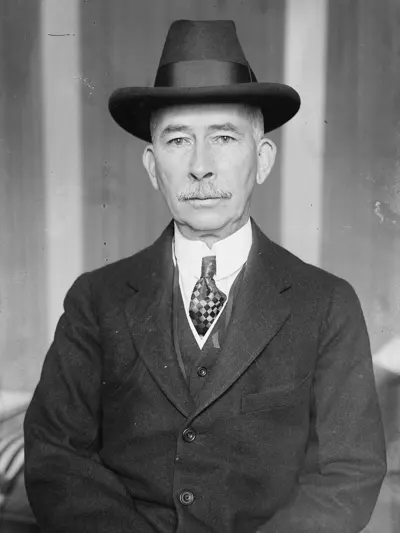
Edward Mandell House was an American diplomat, and an advisor to President Woodrow Wilson. He was known by the nickname Colonel House, although he had performed no military service. He was a highly influential back-stage politician in Texas before becoming a key supporter of the presidential bid of Wilson in 1912. Having a self-effacing manner, he did not hold office but was an "executive agent", Wilson's chief advisor on European politics and diplomacy during World War I (1914–18) and at the Paris Peace Conference of 1919. In 1919 Wilson, suffering from a series of small strokes, broke with House and many other top advisors, believing they had deceived him at Paris.
