Lewis Mumford Quotes
To the extent that the scientist's capacity for pursuing the truth depends upon costly apparatus, institutional collaboration and heavy capital investment by government or industry he is no longer his own master.
Mumford, Lewis. The Myth of the Machine: The Pentagon of Power. Harcourt Brace Jovanovich, 1970.


MacNab was also a director of the Great Western Railway.

Mises defines government revenue in such a manner that it always relly belonged to individuals, therefore when government invests in enterprises that accumulate capital via profits, Mises does not consider it capital accumulation. One counterexample of this point is the George Washington Bridge in New York, built in Mises lifetime by Robert Moses of the New York Port Authority. The tolls on the bridge paid off the bondholders who financed much of the initial construction. But then capital started to accumulate at such a rapid rate that Moses was able to build other capital projects ranging from highways to the World Trade Center Buildings with capital constantly accumulated. The New York Port Authority under Moses generated more capital appreciation than any corporation that had been in existence at that point. And he could not even sell stock. However, the Port Authority and a few others were exceptions. Generally government did was unable to accumulate capital in its enterprises.

At the time, the public investment in science was just exploded as a result of the Manhattan Project, the effort that researched and built the first atomic bomb. By the end of the 20th century, a period of a little more than 50 years science research was funded in the billions of dollars and even correcting for inflation, the investment (Federal, State, and Local) had multiplied many fold.

This quotation is important because it illustrates the important research and development role that the Government has played for the most important technological innovations of the second half of the 20th century. Even though most of the computer breakthroughs were developed by private companies, the government paid for most of the R&D and purchased the vast majority of the first computers on the market when private companies had not yet realized the value of computers and with the exception of IBM most of the private sector would invest no money in this unproven technology. This was the same as the telegraph, the railroads and others before and the Internet and more afterward.

This is why the American Government has played such a major role in most of the great technologies in American History. Interchangable Parts (A federal contract with Eli Whitney), Canal Construction (New York State built the Erie Canal), the Railroad (federal government gave hugh tracts of land to build the rail lines to the West), the Telegraph (No one would use it until the government financed the experiment to prove it by creating a line between Baltimore and Washington), AC Electricity, there the city of Rochester NY hired Tessler and Westinghouse to Demonstrate Generating Electricity at Niagra Falls and transmitting it over 20 miles which Edison’s Direct Current could not do), immunization (the Army Medical Corps gave the first grants to universities to develop the science of vaccines and immunization, the computer (in WWII the U. S. financed the development of computers sent to England to implement Turing’s breaking of the German “unbreakable” code), atiomic energy (the Manhattan Project—the largest scientific endeavor the world has known), the Internet (Developed with long term research funds for DARPA the future technology research arm of the Defense Department. American investors and businesspeople took each of these and developed them but the initial steps, when no capitalist dared risk on such basic and futureistic efforts were taken by American Government which probably could never have developed these technologies but the private sector could not do it with government in the role Moritz herein describes.

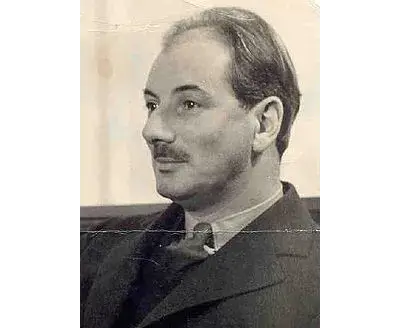
Lewis Mumford was an American historian, sociologist, philosopher of technology, and literary critic. Particularly noted for his study of cities and urban architecture, he had a broad career as a writer. Mumford made signal contributions to social philosophy, American literary and cultural history and the history of technology. Mumford was influenced by the work of Scottish theorist Sir Patrick Geddes and worked closely with his associate the British sociologist Victor Branford.
