Ben Jonson Quotes
Tis not the wholesome sharp mortality,
Or modest anger of a satiric spirit,
That hurts or wounds the body of a state,
But the sinister application
Of the malicious, ignorant, and base
Interpreter; who will distort and strain
The general scope and purpose of an author
To his particular and private spleen.
Jonson, Ben. Poetaster. Matthew Lownes, 1602.


This quotation illustrates that government use of censorship and classification to cover up errors and mistakes in not just a modern phenomenon. It is a technique that government’s will gravitate to whenever they have the chance.


Not one to mince words, TR was scathing in his attacks on other politicians.

In September of 2005 a Danish Newspaper published some political cartoons showing the hypocrisy of some Muslims who use Islam to justify murder of innocents and terrorism. Months later, many in the Middle East protested vehemently and Muslim riots broke out because the Prophet Muhammad's visage was depicted against Islamic tradition. Many Muslim leaders claimed that insulting religion was an “abuse” of freedom of speech including those from nations which regularly publish material that is virulent against Christians and Jews.


Catledge came to California to cover the gubernatorial race between incumbent Republican Governor Merriam and writer Upton Sinclair, an avowed socialist who was running neck and neck. Palmer was then the Political Editor of the Los Angeles Times and his newspaper never covered anything Sinclair did for the campaign and only covered Merriam. Catledge observed that this was not only unfair but poor journalism.


It is one of the tactics of Putin’s Russia. as it was with the Stalinist Era, to commit dissidents to mental institutions under the twisted logic that no one who was sane could possibly ge against such a beneficent government,


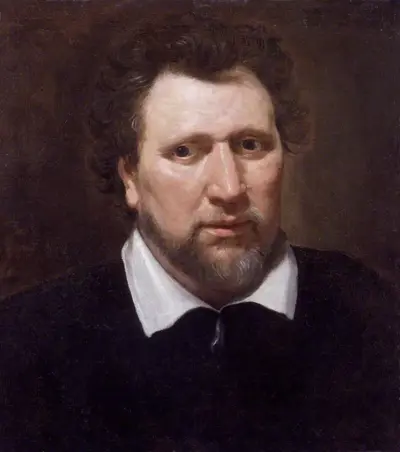
Benjamin Jonson was an English playwright and poet. Jonson's artistry exerted a lasting influence upon English poetry and stage comedy. He popularised the comedy of humours; he is best known for the satirical plays Every Man in His Humour (1598), Volpone, or The Fox (c. 1606), The Alchemist (1610) and Bartholomew Fair (1614) and for his lyric and epigrammatic poetry. "He is generally regarded as the second most important English dramatist, after William Shakespeare, during the reign of James I."
