Louis de Broglie Quotes
Thus with every advance in our scientific knowledge new elements come up, often forcing us to recast our entire picture of physical reality. No doubt, theorists would much prefer to perfect and amend their theories rather than be obliged to scrap them continually. But this obligation is the condition and price of all scientific progress.
Louis-Victor de Broglie, 1892-1987, French Physicist & Nobel Laureate, New Perspectives in Physics, 1962
Sourced by: Eigen's Political and Historical Quotations


By “arts” Jefferson meant the mechanical arts—inventions and engineering. Jefferson Extrapolated the science and technology progress at the time to the future in a way that few others did at that time.

Sir Humphry was a religious man, and yet he focused on one of the great differences between science and religion. The latter is presumed true and eternal by its faithful, while science is never such. No truth is eternal in science and rarely does a scientific “truth” last 100 years without modification, elaboration or additional complexity. This is one of the reasons that scientists make poor witnesses at Congressional hearings. They are never certain of anything if they are good scientists. Witnesses from other fields testify with much more certainty as they are motivated by self interest or ideology where doubt is unacceptable.

This is a fundamental difference between science and religion. Politicians fall on both sides. Those who take a scientific view that everything in politics is provisional and might change and those who are ideological where the ideology is a fixed credo.


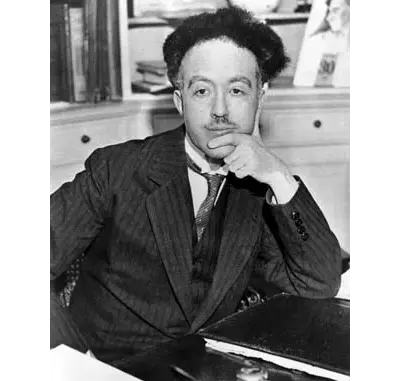
Louis Victor Pierre Raymond, 7th Duc de Broglie was a French physicist and aristocrat who made groundbreaking contributions to quantum theory. In his 1924 PhD thesis, he postulated the wave nature of electrons and suggested that all matter has wave properties. This concept is known as the de Broglie hypothesis, an example of wave–particle duality, and forms a central part of the theory of quantum mechanics.
