Francis William Aston Quotes
There are those who say that such research should be stopped by law, alleging that man’s destructive powers are already large enough. So no doubt that the more elderly and ape-like of our prehistoric ancestors objected to the innovation of cooked food and pointed out the grave danger of the use of the newly discovered agency, fire.
Francis W. Aston, 1877–1945, English Nuclear Chemist & Physicist, Inventor of the Mass Spectrograph, Answering critics of the new research into the atom, Nobel Laureate in Chemistry, Lecture, Cambridge University, 1936
Sourced by: Eigen's Political and Historical Quotations


First Muslim to win the Nobel Prize

By “arts” Jefferson meant the mechanical arts—inventions and engineering. Jefferson Extrapolated the science and technology progress at the time to the future in a way that few others did at that time.

Most environmentalists limit the vision of their solutions to using less of our precious natural resources which is very important but just as important and perhaps more so in the long run is increasing the supply of these resources. Food is an example. The major reason that there is no serious food shortage world-wide is that we have increased the productivity of agriculture requiring less labor, less water, less fertilizer, less land, and less dependency on weather. Distribution has also improved, but there is no very good way of distributing something for which there is a great shortage.


Father of Harriet Beecher Stowe and Henry Ward Beecher. Father of Harriet Beecher Stowe and Henry Ward Beecher


Gore who generally was a progressive on almost all issues, was quite conservative when it came to human genetic manipulation and cloning. Scientists for whom Gore was a favorite politician based on his leadership of digital technology and the Internet and his Nobel prize winning work on environmentalism, but his stance in this quotation was puzzling to many.


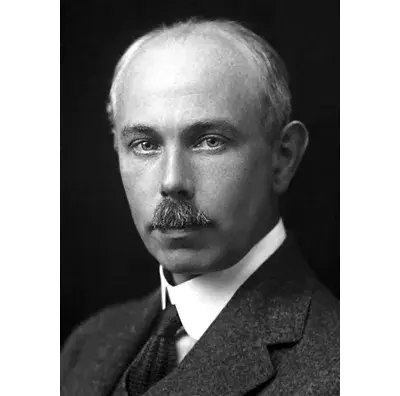
Francis William Aston FRS was an English chemist and physicist who won the 1922 Nobel Prize in Chemistry for his discovery, by means of his mass spectrograph, of isotopes in many non-radioactive elements and for his enunciation of the whole number rule. He was a fellow of the Royal Society and Fellow of Trinity College, Cambridge.
