Thomas Kuhn Quotes
The historian of science may be tempted to exclaim that when paradigms change, the world itself changes with them.
Kuhn, Thomas S. The Structure of Scientific Revolutions. 3rd ed., University of Chicago Press, 1996, p. 111.


This characteristic of science causes the politicians great difficulty when allocating public funds for scientific research. It is often very hard to attribute credit to the right scientist when a scientist herself might not yet realize the great significance of her work. Of a number of different scientists each contributing one step of a process when the person who worked on the last link could not possibly have done it without the others along the way. Who to fund and why is terribly frustrating which is why the National Science Foundation and the National Institutes of Health make most of their funding decisions on the basis of proposals and peer review and decision making. None the less, many politicians are constantly trying to interject their preferences, almost always based on their ignorance, especially when they can get research funds into their district.


Much of modern science involves non-intuitive concepts that can rarely if ever be discovered using common sense. It was hard enough for most people to accept the notion of an infinite number, but now we know that there are many infinite numbers and they are all different form one another. Darwinian thinking was contrary to most learned thought of the day, and even much public opinion today. Even Albert Einstein had to struggle to comprehend the findings of Quantum Mechanics which are very non intuitive—one object can be in two different places at the same time. Meanwhile, most people are totally unaware that the world around is does not correspond to normal human intuition and common sense. Yet these are the same and only tools that we continue to use in making decisions about our society. And the fundamental truths of yesterday, the foundation of past thinking and glory, are the naïve simplifications and errors of today and become the superstitions of tomorrow.


He was addressing the misunderstanding that many laypeople and most anti-evolutionists have that if Evolution is only a theory why put so much stock in it. The layman often uses the word “theory” in opposition to “fact.” But to the scientist theories are of different types—those that are as of yet speculation and those for which a strong body of evidence exists. Evolution, like Relativity, has a huge amount of evidence supporting it. Yet in time every good scientist knows that all these proven theories will be modified with new knowledge. Relativity has been demonstrated as having errors initially by Einstein himself. The essence of these things are true although elements change. The early law of gravity is the best example. We know that it is wrong in many, circumstances—in space for example. But it, none the less, is fundamental to much analysis and with our much more sophisticated understanding of it we still talk of the “Law” of gravity even though we realize that it is not quite correct in all circumstances.

Ingersoll was considered to be the greatest orator and political thinker of his day, but his overt atheistic views curtailed his elected political career.


For many people, especially, bright and educated people, science has been an escape from unstable, political situations.


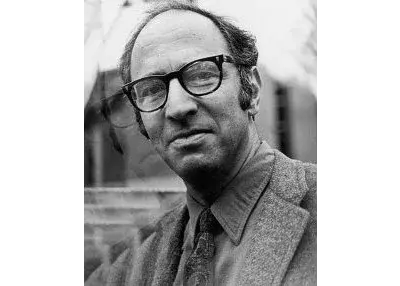
Thomas Samuel Kuhn was an American philosopher of science whose 1962 book The Structure of Scientific Revolutions was influential in both academic and popular circles, introducing the term paradigm shift, which has since become an English-language idiom.
