C. S. Lewis Quotes
Thus the criminal ceases to be a person, a subject of rights and duties, and becomes merely an object on which society can work. And this is, in principle, how Hitler treated the Jews. They were objects; killed not for ill desert but because, on his theories, they were a disease in society. If society can mend, remake, and unmake men at its pleasure, its pleasure may, of course, be humane or homicidal. The difference is important. But, either way, rulers have become owners.
Lewis, C. S. "The Humanitarian Theory of Punishment." God in the Dock: Essays on Theology and Ethics, edited by Walter Hooper, Wm. B. Eerdmans Publishing Co., 1970, p. 288.


The NRA issued regulations making many forms of child labor illegal. Many opposed to the idea, saw it as an attack on the freedom of a parent to decide whether a child would or could work and under what considerations. A father could send his son to work in a dangerous coal mine 12 hours a day and boys grew up never seeing the sun shine. This point of view and “right” of the parent, actually prevailed and the Supreme Court declared the NRA unconstitutional. It took a Constitutional Amendment that passed with overwhelming popularity to allow the government to regulate sweatshops, coal mines and other conditions of child labor. Like most things conservatives opposed, the association of a program or reform with communism traditionally stirred opposition, even to something as benign as child labor regulation.


As a result of the programs and philosophy he expounded, Leontiev joyously predicted:


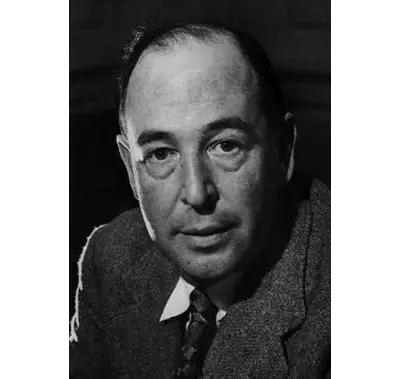
Clive Staples Lewis was a British writer and lay theologian. He held academic positions in English literature at both Oxford University (Magdalen College, 1925–1954) and Cambridge University (Magdalene College, 1954–1963). He is best known for his works of fiction, especially The Screwtape Letters, The Chronicles of Narnia, and The Space Trilogy, and for his non-fiction Christian apologetics, such as Mere Christianity, Miracles, and The Problem of Pain.
