Plutarch Quotes
Though others before him had triumphed three times, Pompeius, by having gained his first triumph over Libya, his second over Europe, and this the last over Asia, seemed in a manner to have brought the whole world into his three triumphs.
Plutarch. Plutarch's Lives. Translated by Bernadotte Perrin, vol. 5, Harvard University Press, 1917, p. 235.

Constantine the Great


He didn’t quite conquer the whole world, but he did control most of it. One substantial difference between him and others, is that the Mongols were not interested in managing an Empire, All they wanted was an annual payment of tribute, and if that were forthcoming, the left the conquered cities and kingdoms to their own management and governance.

Many Muslim extremists see all the Islamic countries as ONE nation, that should dominate and convert the rest of the world.

His army had been so successful that many of his men had all the riches they ever dreamed of and great glory as well. Some just wanted to slow down and enjoy the conquered lands where they had been received very cordially as Alexander’s “occupation” was much more benign than the Asian rulers had been. Most however wanted to go back to Macedonia and enjoy their wealth and prestige. This statement of Alexander’s turned most of the men around.


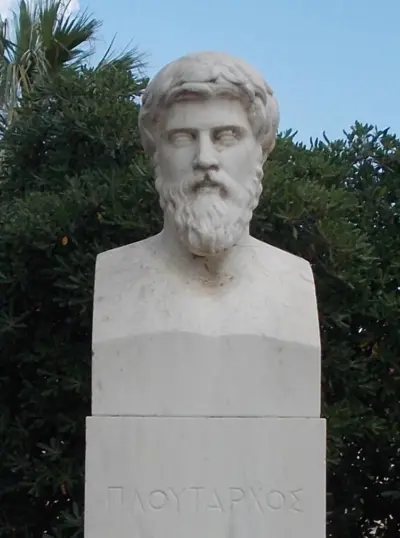
Plutarch (/ˈpluːtɑːrk/; Greek: Πλούταρχος, Ploútarchos; Koine Greek: [ˈplutarkʰos]; AD 46–after AD 119) was a Greek Middle Platonist philosopher, historian, biographer, essayist, and priest at the Temple of Apollo. He is known primarily for his Parallel Lives, a series of biographies of illustrious Greeks and Romans, and Moralia, a collection of essays and speeches. Upon becoming a Roman citizen, he was named Lucius Mestrius Plutarchus (Λούκιος Μέστριος Πλούταρχος).
