Manu Quotes
Those who do not give assistance according to their ability when a village is being plundered, a dyke is being destroyed, or a highway robbery committed, shall be banished with their goods and chattels.
Manava Dharma Shastra. This text is a part of the Hindu Holy Texts. Hindus believe that Manu was a prophet whose text is revealed or inspired.
Manu, ~ 500 BC, Hindu Teacher from India, Laws of Manu
Sourced by: Eigen's Political and Historical Quotations

Manava Dharma Shastra. In the Hindu caste system, the highest caste was allowed to vigilante justice while the other castes had to go through the king and his magistrates. This text is a part of the Hindu Holy Texts. Hindus believe that Manu was a prophet whose text is revealed or inspired.
Manava Dharma Shastra. The punishment for male adultery was not capital as in the Ancient Jewish and early Christian and Muslim law (Sharia) even today. However, if the adulterer had relations with the wife of a higher cast man, then the punishment was death. Even intercourse with an unmarried woman of a higher caste was punishable by death, but not so for relations with a woman of the same or lower caste. This text is a part of the Hindu Holy Texts. Hindus believe that Manu was a prophet whose text is revealed or inspired.

This was the an early history of the brutal 1298 Muslim Invasion of Gujarat a large state of India that was then Hindu. The Islamic Armies spread out from the Middle East and converted a large proportion of the worlds people to Islam. Force or “conversion by the sword” was one of the tools, but millions of people welcomed Islam and saw it as a great modernizing force for the dignity and equality of people—especially in Hindu India where the caste system made all inferior to the Brahmins and the lowest cast literally “untouchables.”


The Germans were brutal in their occupation of Poland.
Manava Dharma Shastra. The caste system in action. Note however that the highest caste aristocrats could not abuse even lower caste women with impunity the way that was common in early Christian Europe. However, the punishment was not death as required by Muslim law—see {590409}. This text is a part of the Hindu Holy Texts. Hindus believe that Manu was a prophet whose text is revealed or inspired.
Manava Dharma Shastra. The Brahmana or Bramin is a member of the highest caste. Even in European Aristocratic societies, Aristocrats never had the degree of privilege that Indian religion, law and custom provided. Some of this socially exists today. This text is a part of the Hindu Holy Texts. Hindus believe that Manu was a prophet whose text is revealed or inspired.
Manava Dharma Shastra. This text is a part of the Hindu Holy Texts. Hindus believe that Mahu was a prophet whose text is revealed or inspired.
Manava Dharma Shastra. The Hindus believe in reincarnation and that the souls of animals move up the ladder and if they are good are eventually born as humans (Sudras). These are the lowest caste in this terribly discriminatory system—the “untouchables.” But if a Sudra lives a pious life and accepts his lot, he is reincarnated as a higher cast human (twice born). This law illustrates the incredible discrimination that the cast system produced. In modern India, the caste system is illegal and there is no discrimination in law or by government. However it is still terribly evident in social life, marriage, employment and most phases of Indian society. This text is a part of the Hindu Holy Texts. Hindus believe that Manu was a prophet whose text is revealed or inspired.


This is one of the earliest examples of attempting to reduce crime by altering community norms.

Odo of Chatillon-Sur-Marne. The Pope was addressing officials of Christian counties throughout Europe. Crime control then seems to have been a hot political issue as it is today.


Remarks before the Joint Defense Appeal of the American Jewish Committee and the Anti-Defamation League of the B’nai B’rith.


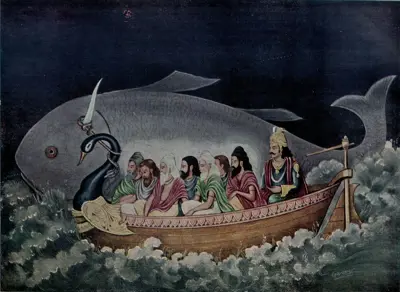
Manu (Sanskrit: मनु) is a term found with various meanings in Hinduism. In early texts, it refers to the archetypal man, or to the first man (progenitor of humanity). The Sanskrit term for 'human', मानव (IAST: mānava) means 'of Manu' or 'children of Manu'. In later texts, Manu is the title or name of fourteen mystical Kshatriya rulers of earth, or alternatively as the head of mythical dynasties that begin with each cyclic kalpa (aeon) when the universe is born anew. The title of the text Manusmriti uses this term as a prefix, but refers to the first Manu – Svayambhuva, the spiritual son of Brahma.
