Ernest Blythe Quotes
Those who connived in this crime against us … merits no more consideration than a wild beast, and should be killed without mercy or hesitation as opportunity offers.
Ernest Blythe, 1889-1975, Irish Republican Revolutionist and Organizer of Irish Volunteers, Irish Minister of Trade and Senator, Statement about dealing with collaborators with the English during the revolution
Sourced by: Eigen's Political and Historical Quotations

These battles with the Irish—in this case the MacDonnell clan—were brutal atrocities where the winners of the battle killed all the losers and the women and children with them in the case of the Irish.

A Cossack revolt had broken out in 1707 and was put down by the Czar’s forces. He then issued what might be one of the first official orders for genocide. Few Cossacks survived.


Instructions to followers in revolting against the mulattoes

The defendants included the County Sheriff, a deputy, and the Imperial Wizard of the Mississippi KKK who had ordered the murders. Cox, an inveterate racist (See {637614}.), gave the two men convicted of 1st degree murder, including the Klan leader, to only 10 years, and the 2nd degree murderers were only sentenced to 3-5 years as the trial was Federal for Civil Rights violations but the judge did not even impose the maximum jail sentence.

While there were atrocities committed by both sides in the Civil War, the proportion tended to be heavily weighted by Confederate perpetrations. The Confederate officers were not appointed by the command structure and under strict military discipline, but they were elected by the troops and could be so removed (except for the general officers who were appointed by the confederacy). Also, the confederate troops were not as well fed or supplied as the North and they had fewer resources with which to fulfill their obligations to prisoners. In a number of battles, ill-clothed soldiers stripped the Union dead, wounded and prisoners, often naked to use their shoes, blankets and clothing, Union prisoners of war were much more badly abused in the prisoners of war camps like Andersonville which were not under the command of Robert E. Lee.

Nathaniel Bacon had led a rebellion in Virginia and had routed the Governor’s troops and caused him to flee leaving control of Virginia to Bacon and his followers who were far more democratic and advanced. However Bacon succumbed to swamp fever, and his followers could not hold the colony together giving the Governor a chance to establish his authority. He then went on a vengeful reign of terror, executing all of Bacon’s followers he could get his hands on. With no danger to the authority of the Crown, King Charles felt that Berkeley had gone too far. The King’s father Charles I had been executed in the aftermath of the English Civil War, but he had executed far fewer than Berkely had done in Virginia.


Lev Davidovich Bronstein


See {639177}.for part of the article. Platt even demanded of President Roosevelt that the Journalist, White, be barred from the White House. Actually White was a very good friend of Roosevelt’s and generally agreed with White’s assessment of Platt.


This was one of Jackson’s official major justifications for his controversial Indian Removal policy. The logic was that since there had been some Indian raids on whites with whites being killed, the whites had a right to retaliate and a good way of doing that was by taking their land and removing them to lands far away. He saw a Christian virtue to the policy as they whites did not raid and kill the Indians. The “logic” such as it was, of course, ignored the fact that there had been white raids and massacres of Indians as well, but in both cases, they were done by a small minority of the Indians and Whites, Jackson’s view was that all Indians should be held responsible for the act of some violent Native Americans. However Jackson had used this guilt generalization before and even used the term “retaliatory vengeance” when he vowed revenge on the British for his treatment as a Prisoner of War in the American Revolution — See Quotation 621975.

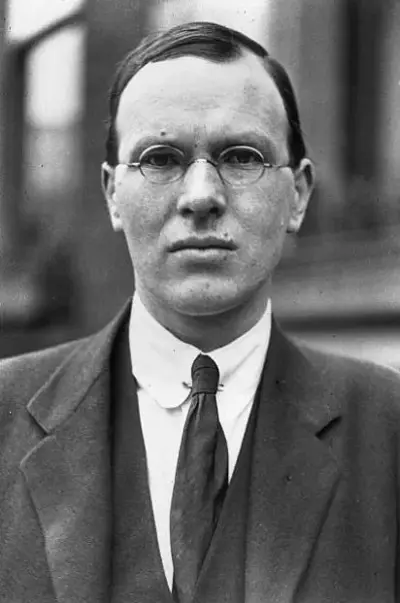
Ernest Blythe was an Irish journalist, managing director of the Abbey Theatre, and politician who served as Minister for Finance from 1923 to 1932, Minister for Posts and Telegraphs and Vice-President of the Executive Council from 1927 to 1932 and Minister for Local Government from 1922 to 1923. He was a Senator for the Labour Panel from 1934 to 1936. He served as a Teachta Dála (TD) for the Monaghan constituency from 1921 to 1933 and Member of Parliament (MP) for North Monaghan from 1918 to 1922.
