Thomas Hobbes Quotes
… those things to be held in common which cannot be divided
Thomas Hobbes, 1588-1679, English Political Philosopher, Philosophicall Elements of a true Citizen
Sourced by: Eigen's Political and Historical Quotations


Spinoza was one of the most feared intellectuals in human history—feared, that is, by the established power structures. He is the only known person who was excommunicated by the Catholics, the Jews and the Muslims—all were forbidden to read his works. He was the enemy of authority and advocated personal reason as the guide for men.


The Catholic view on the subject varied from time to time, even with the same Pope. See {638558} for another quote from this Pope that gives a different point of view.


The Diggers were a religious-economic movement that even today would be considered very radical. They advocated the right of the poor to go onto public lands and farm them—thus the name “Diggers.” Beyond their opposition to the private ownership of land to the exclusion of the poor, Winstanley and the Diggers promulgated another very modern doctrine: That the poor should take the responsibility and have the right to determinine how the society should provide for the poor. A version of this became one of the Mottos of the Poverty Program of 1964. See {616966}.

This quotation illustrates a very interesting historical fact about white understanding of Native American concepts of property and ownership. Here is a Scottsman before the American Revolution who is writing about American Indians and their communal concept of property. The “purchases” of Indian land from individual Indians therefore has even more doubt cast on the propriety than if the whites were acting in good faith. Furguson had personally visited North America for a brief visit.

This is a fascinating quotation in that Cooper was a strong patriot of the American system. Today, this statement would be considered un-American and communistic. The notion that each person had a right to a share of land ownership. America changed in this respect. In Cooper’s day, there was so much land and so few people that it was part of the American concept that each man should have land. (Free men and not slaves of course). But as the population grew, speculators realized that there was opportunity and today in America ALL LAND is owned by people, corporations, other organizations and the government. The population is still growing and the potable water is in shorter and shorter supply. Already, we have to pay for water in much of the country. Perhaps in years to come, someone who argues that each person is entitled to clean air to breathe might be thought of as a radical communist.


This is a very different view from the prevailing American legal and cultural view. The United States grants patents and copyrights even when the taxpayer has paid for much of the research and development, even when the inventor was educated by the state. The difference is an intellectual and philosophical one. America is anxious to incentivize people to create and invent and especially to encourage capital to flow to R&D. Toynbee comes from an intellectual tradition where science and technology was the finest in the world, but it was done by the well-to-do for the sake of doing it. Both approaches had been immensely success for their times, but the need for technological development is so great that we should not limit it to the people of wealth and a social class for whom money may not be a driver while it is for most others.
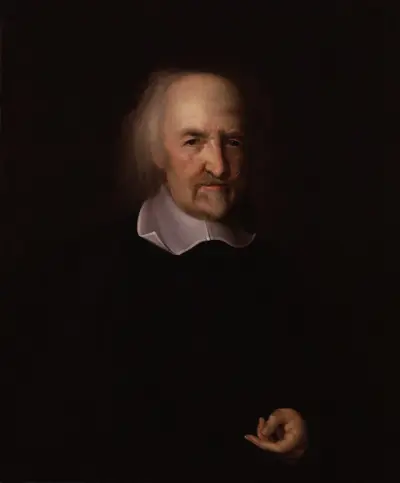
Thomas Hobbes was an English philosopher, considered to be one of the founders of modern political philosophy. Hobbes is best known for his 1651 book Leviathan, in which he expounds an influential formulation of social contract theory. In addition to political philosophy, Hobbes contributed to a diverse array of other fields, including history, jurisprudence, geometry, the physics of gases, theology, and ethics, as well as philosophy in general.
