John Locke Quotes
… those are not to be tolerated who deny the being of God because promises, covenants, and oaths, which are the bonds of human society, which can have no hold upon an atheist.
Locke is one of the few political writers who advocated intolerance of atheists, who actually tried to have a rational reason other to simply say that they are apostates and therefore unacceptable. His argument was that most of the legal system depends on witnesses and parties to contracts or loyalty who swear before God that they are telling the truth and will be bound by their own salvation to complying with their promises and commitments. The atheist, however, fears no retribution if he lies under oath and he does not worry about his salvation if he breaks his oath. The fallacy was that the system never really worked with the religious people. With all the promises, covenants and oaths broken and repudiated by religious, “God-fearing men”, the atheists could hardly have done worse.
John Locke, 1632-1704, English Political Philosopher, Two Treatises of Government & A Letter Concerning Toleration, 1667
Sourced by: Eigen's Political and Historical Quotations


This is one of the earliest examples of attempting to reduce crime by altering community norms.


The choice of non-capitalization of the word “god” was Jefferson’s and is retained herein. This quotation is one of the most important in American history because it set the boundary for when it was proper for government to legislate personal behavior. For Jefferson, legislation was only justified if the behavior damged other people economically or physicly. Moral, religious, ethical or cultural affects were not sufficient to interfere with other people's freedom. The quotation was initially given to argue against a state etablished church and blasphemy laws and has been used in arguments even into the 21st century debate over gay marriage.


Husayn Ali Nuri

This sura has justified major discrimination against non-Muslims so that they should never appear “preeminent” over the faithful. See for example, {617157} and {617160}.

This problem exists even in democracies where administrations often seek to expand their power and use or create a crisis to justify the expansion of their powers.


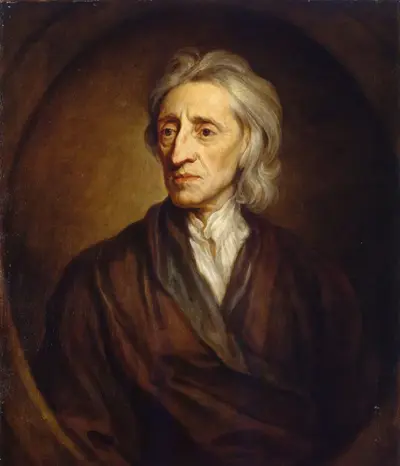
John Locke FRS was an English philosopher and physician, widely regarded as one of the most influential of Enlightenment thinkers and commonly known as the "Father of Liberalism". Considered one of the first of the British empiricists, following the tradition of Sir Francis Bacon, Locke is equally important to social contract theory. His work greatly affected the development of epistemology and political philosophy. His writings influenced Voltaire and Jean-Jacques Rousseau, and many Scottish Enlightenment thinkers, as well as the American Revolutionaries. His contributions to classical republicanism and liberal theory are reflected in the United States Declaration of Independence.
