Jeremiah S. Black Quotes
[Referring to Thaddeus Stevens:] His mind was a howling wilderness, so far as his sense of obligation to God was concerned.
Jeremiah S. Black, 1810-1883, U. S. Attorney General & Secretary of State, Quoted in Welles, Diary, 1911
Sourced by: Eigen's Political and Historical Quotations


The debate was on the concept of a National Fast Day. Thomas Jefferson, who rarely spoke or debated made an exception and strongly opposed the proposal of which Adams was a prime supporter. Jefferson carried the motion but Adams had sharply rebuked Jefferson’s lack of piety to the degree that he feared that he had insulted and angered Jefferson with whom he agreed on most issues. Jefferson, however, appeared not to be insulted at all, and after the debate took the chair next to Adams. The incident was the subject of a famous letter from Benjamin Rush to Adams years later. It is not clear whether Jefferson was being particularly magnanimous and forgiving or as some suspect did not regard being accused of a lack of religiosity as an insult at all. Later, of course, the two became major political enemies, and then became friends after they both were out of politics.


The phrase ‘This would be the best of all possible worlds, if there were no religion at all!!!’ is often quoted to imply that Adams was opposed to religion. This is a classic use of using quotations out of context for if one reads the entire quotation, Adams is stating that without religion the world would not be a particularly fit place. Some religionists then use the entire quotation to argue that Adams was a religious, Christian man who saw America as a Christian nation. That too is out of the context of the totality of his views—see {592753}.


Einstein’s religious views were very sophisticated and unusual. He was a deist—a believer in God. He was of Jewish background and like some Protestant sects, Jews can interpret scripture and the nature of God as individuals. They need not follow a particular doctrine. However Einstein had a very complex vision of God—as he described it, the “God of Spinoza”—a 17th century Rabbi and Philosopher whose views were so radical that his books were banned and he was excommunicated by the Rabbis of Holland, a rarity in Judaism. This view of God is not the human-related form but a view of God as an abstraction everpresent and a prime mover inherent in nature, the world and in humanity.


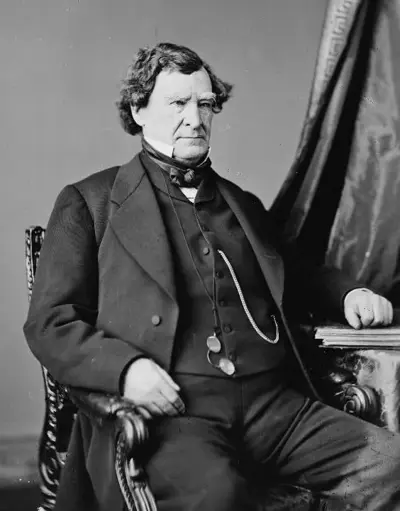
Jeremiah Sullivan Black was an American statesman and lawyer. He served as a justice on the Supreme Court of Pennsylvania (1851–1857) and as the Court's Chief Justice (1851–1854). He also served in the Cabinet of President James Buchanan, first as Attorney General (1857–1860), and then Secretary of State (1860–1861).
