Albert Camus Quotes
This is what separates us from you: We made demands. You were satisfied to serve the power of your nation, and we dreamed of giving ours her truth.
Albert Camus, 1913-1960, French Nobel Laureate in Literature, Letter to a German Friend, Quoted in Peter C. Newman, The Canadian Revolution, 1995
Sourced by: Eigen's Political and Historical Quotations


Explaining the reason for the Paris insurrection against the occupying Germans in World War II in contrast to the general French collaboration and capitulation. The French army, which was larger than the German, put up minor resistance and capitulated quickly when the Germans invaded. A number of French leaders formed a Nazi puppet government in Vichy. Many Frenchmen collaborated with the German Nazis. One of the main reasons for the formation of the French Resistance movement was for the French to have any honor after the war was over. They wanted the world to know that there were Frenchmen who valued freedom and justice and were not cowards--there were French who would risk their lives for freedom and justice. The French Resistance was extremely effective but very small, and to many Frenchman's embarrassment, the Communists were much more active in the Resistance than the conservatives. When the allies were closing in on Paris, and the German's were pulling out, the Parisians could just have waited until the Allied troops forced the Germans out. However, a small group of Parisians organized a major insurrection where Germans were attacked and sniped out while they were pulling out. When the Allies arrived, the Parisians had not been passive victims who had been freed by foreign troops, but had participated in their own fight for freedom and thus retained some honor and dignity. The insurrection was not without cost as many French men and women were killed in the insurrection, and many thought that the gesture of honor was an unnecessary risk and sacrifice. But the war ended in France with the French active in expelling the enemy with great bravery, something that had not generally happened at the beginning or in the midst of the war.


Chile with help from San Martin had ejected the Spanish. O’Higgins, the Chilean leader had joined up with San Martin and served under his command. The sectional rivalry bothered men like Carrera. Instead of seeing all the South Americans fighting the Spanish as allies as O’Higgins did, Carrera and his brothers refused to join a government of unity and they and their troops were just as dictatorial and cruel as the Spanish had been. O’Higgins gave Indians and Blacks equal rights with whites which distressed the aristocratic Carrera’s. Finally the Carrera’s tried to set up their own government, and the new Chilean government disarmed their militia and executed two of the three Carrera brothers who were leading the militia troops who were little more than thieves and brigands.

British colonial economics imported raw materials to England which then exported them back to the colonies as manufactured goods. Gandhi correctly calculated that by minimizing purchase of English cloth, colonial control of India would not be as profitable. Gandhi not only called for the boycott, but called on Indians to spin their own cloth, set an example be spinning himself, and his Congress party adopted the spinning wheel as its logo and symbol which continues today. Narcotics, was at the time not only legal, but British economic interests controlled much of the world narcotics trade. Gandhi’s call for a boycott of narcotics was as much an economic tactic as it was a health measure.


For his seditious activities he was sentenced to penal servitude for life. He escaped and came to America where he entered politics

The first sentence of this quotation was a favorite of Paine's. He had earlier used it in Common Sense in 1776. See {635451}.

He had been King of Portugal and then had come to the Portuguese colony of Brazil where he led a revolution against Portugal, declared independence from the “mother country, and was elected as Emperor of Brazil. The Colony was much larger and richer in natural resources than the “mother country.”


Those who have fought against dictatorial governments for their basic human rights, found after victory and the overthrow of the dictator, that there was another force fighting for control which would deny citizens human rights based on a theocracy. They wanted the end of the dictator so they could use their interpretation of a religion as the excuse to deny all citizens basic human rights.

In most revolutionary settings leaders have to persuade people who have voted with no success to turn to the rifle. In Ireland at this point, almost all the nationalsits knew that the rifle would help them but they were not sure that a vote would have the effect of a bullet.


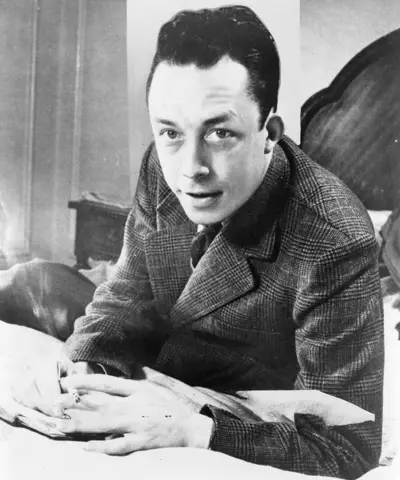
Albert Camus was a French philosopher, author, and journalist. He won the Nobel Prize in Literature at the age of 44 in 1957, the second-youngest recipient in history. His works include The Stranger, The Plague, The Myth of Sisyphus, The Fall, and The Rebel.
