Khmer Rouge Quotes
Revolution against imperialism is not an action of inviting guests to have meal, writing articles, braiding, education, softness or fear of enemy. But it is a class wrath seized to topple another class
Cambodian Khmer Rouge Slogan, 1970s
Sourced by: Eigen's Political and Historical Quotations

The word “smashing” is a literal translation from the Khmer language. It is not used in the metaphorical sense as we are used to. To save money, arms, bullets and resources the Khmer Rouge method of execution was to “smash” the victim’s head in with a shovel or other implement. This slogan told people literally to murder their political enemies in this brutal way.


The occasion for the speech was the 60th birthday of Russian Premier, Joseph Stalin.


And as the leader of the exploited, after his revolution he became a dictator himself, albeit a very popular one amongst most Cubans.


There were massive strikes in Italy. These strikes began in the engineering factories and soon spread to railways, road transport, and other industries. The strikers, however, did more than just occupy their workplaces, they seized them for themselves. Soon 500,000 strikers were at work, producing for themselves. See {616351} for a description. The question was what next. Malatesta and others recommended that they go on and take over the government and not just try and have better labor conditions and factory operations. He warned that the capitalists and middle class bourgeoisie had been so frightened by the successful national strike that they would even ally with the Fascists who they did not like either. That is how Mussolini and his Fascists came to power.

The slogan was made famous by James Larkin, 1875–1947, Irish trade union leader who used it frequently and whose memorial statue in Dublin contains the quotation in French, English and Irish.


Despite his speeches like this one, he was a ruthless dictator who then before his death in 2000 handed power to his son.
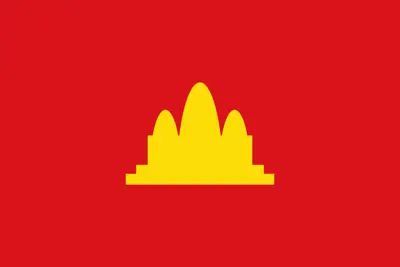
The Khmer Rouge (/kəˌmɛər ˈruːʒ/, French: [kmɛʁ ʁuʒ]; Khmer: ខ្មែរក្រហម, Khmêkrâhâm [kʰmae krɑˈhɑːm]; "Red Khmers") is the name that was popularly given to members of the Communist Party of Kampuchea (CPK) and by extension to the regime through which the CPK ruled Cambodia between 1975 and 1979. The name was coined in the 1960s by Norodom Sihanouk to describe his country's heterogeneous, communist-led dissidents, with whom he allied after his 1970 overthrow.
