John Steinbeck Quotes
This is the thing to bomb. This is the beginning—from "I" to "we". If you who own the things people must have could understand this, you might preserve yourself. If you could separate causes from results, if you could know that Paine, Marx, Jefferson, Lenin were results, not causes, you might survive. But that you cannot know. For the quality of owning freezes you forever into "I", and cuts you off forever from the "we".
Steinbeck, John. The Grapes of Wrath. Viking Press, 1939, p. 206.


By producing growth and an increasing standard of living and universal education, capitalism’s citizens have the time, education, and resources to protest and produce social unrest. However, that assumes that there is also a democratic state. For Schumpeter and many others, capitalism and democracy go hand in hand, but many point to historical examples of one developing faster than the other.


This was published after he died.


See {627027} for an earlier expression of this point.


He was trying to get the Democratic Presidential Nomination.

The term “rugged individualism” was used at the time be very conservatives and the very wealthy to describe business leladers with words that had very good public connotations. They argued that it would be undesirable to curtail their individualism that was so important by any government regulations or laws that would limit what the business leaders could do. However, the reality was that these very successful and powerful “rugged individualists” had regimented most everyone else—employees, consumers, and small businessmen who might sell them services or products. To Tugwell, if the wealthy and powerful few had no restrictions on their individualism, there would be precious little individualism for most of society. He sought a balance of regulating the individualism and prerogatives of the few somewhat in order to allow the vast majority of people to be able to have individuality as well.


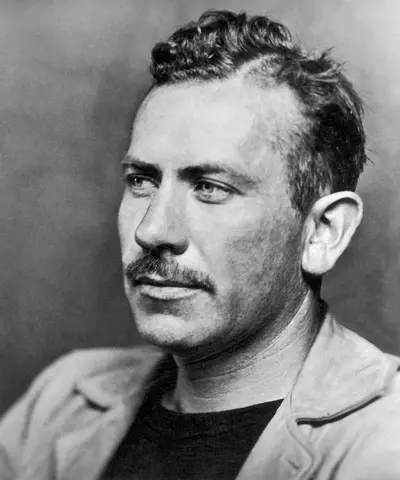
John Ernst Steinbeck Jr. was an American author and the 1962 Nobel Prize in Literature winner "for his realistic and imaginative writings, combining as they do sympathetic humour and keen social perception." He has been called "a giant of American letters," and many of his works are considered classics of Western literature.
