Jean-Bertrand Aristide Quotes
Thirty-two coups d'etat are enough.
Aristide, Jean-Bertrand. Interview by Amy Goodman. Democracy Now!, 16 Mar. 2004.


In the Vietnam War, America and her allies were defending the South Vietnamese from the Communist and Nationalist incursions of the North Vietnamese. However, the South Vietnamese government was itself a very fragile democracy which provided rights little better than the Ho Chi Min lead government of the North. Further, the South Vietnamese rulers and governments while claiming to be democracies, were little more than in name only and were very corrupt. As with many unstable and weak governments, South Vietnam had experienced a succession of coups, with some of his advisors favoring the coups and a few actualy supporting them. Johnson was continually frustrated by this and this expression was his own inimitable style.


He had just assumed his post 6 days earlier. At this point he did not have enough knowledge to favor or oppose the regime change, but he did realize that the decision was a serious one and there would be no turning back. Diem was a creature of the Central Intelligence Agency. An anti-Communist Christian in a Buddhist county, the CIA engineered his rise to power, created his political party, provided him with cash to bribe other Vietnamese politicians, and paid for all the propaganda so he would “win” the Presidential elections. However, he abused the Buddhists, was thoroughly corrupt and ran a corrupt administration, but worst of all from the American point of view, he was unable to motivate the South Vietnamese population to fight the Communists. He reached the point where he was more of a liability, and the Central Intelligence Agency engineered a coup d’etat to remove him from power and replace him with a President more to our liking. (See {634540}.)

President Ngo Dinh Diem of South Vietnam Diem was a creature of the Central Intelligence Agency. An anti-Communist Christian in a Buddhist county, the CIA engineered his rise to power, created his political party, provided him with cash to bribe other Vietnamese politicians, and paid for all the propaganda so he would “win” the Presidential elections. However, he abused the Buddhists, was thoroughly corrupt and ran a corrupt administration, but worst of all from the American point of view, he was unable to motivate the South Vietnamese population to fight the Communists. He reached the point where he was more of a liability, and the Central Intelligence Agency engineered a coup d’etat to remove him from power and replace him with a President more to our liking. (See {634540}.) Another reason this quotation is important is that it demonstrates the involvement that the Attorney General had with foreign and defense policy. Normally the Attorney General has nothing to do in these areas and is not even in the loop. But Robert F. Kennedy was also the President’s brother, and his advice was sought by President Kennedy on almost all matters. He was probably the most influential attorney general in American history.


Fiji had undergone attempted coups where the nation was polarized. The issue of whether and how much to punish the coup attempters was very controversial.

He had been jailed by the corrupt dictator Diaz but escaped to the United States, where with this Declaration, the Mexican Revolution was triggered.


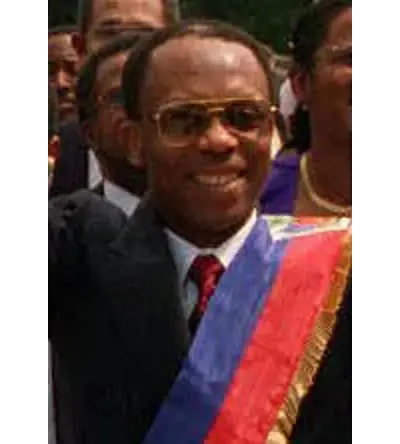
Jean-Bertrand Aristide is a Haitian former priest and politician who became Haiti's first democratically elected president. A proponent of liberation theology, Aristide was appointed to a Roman Catholic parish in Port-au-Prince in 1982 after completing his studies to become a priest of the Salesian order. He became a focal point for the pro-democracy movement first under Jean-Claude "Baby Doc" Duvalier and then under the military transition regime which followed. He won the Haitian general election between 1990 and 1991, with 67% of the vote. As a priest, he taught liberation theology and, as a president, he attempted to normalize Afro-Creole culture, including Vodou religion, in Haiti. President Aristide was briefly president of Haiti, until a September 1991 military coup. The coup regime collapsed in 1994 under U.S. pressure and threat of force (Operation Uphold Democracy). Aristide was then president again from 1994 to 1996 and from 2001 to 2004. However, Aristide was ousted in the 2004 coup d'état after right-wing ex-army paramilitaries invaded the country from across the Dominican border. Aristide and many others have alleged that the United States had a role in orchestrating the coup against him. Aristide was later forced into exile in the Central African Republic and South Africa. He finally returned to Haiti in 2011 after seven years in exile.
