Elihu Root Quotes
Think for a moment of what this patronage system means. How many of you are there who would be willing to do to your private client, or customer, or any private trust, or to a friend or neighbor, what you see being done to the State of New York every year of your lives in the taking of money out of her treasury without service?
At the time, Root was a Senator from New York and was trying to eliminate the large number of patronage jobs, most of which were not even real jobs—just payment. These developed the name of “No Show Jobs.”
Elihu Root, 1845-1937, U. S. Secretary of War & U. S. Secretary of State, U. S. Senator (Republican, NY), Nobel Laureate in Peace, Speech, 1915
Sourced by: Eigen's Political and Historical Quotations


Gallatin was complaining about requirements of Congress, with which he and Madison disagreed but were not powerful enough to stop.


He had not committed any felonies, but these charges were laid under the concept of “high crimes and misdemeanors”.

He was one of the few Congressman who never engaged in the shady practice of earmarking appropriations for their own districts, states, constituents and lobbyists who contribute to their campaigns. However, like almost all members of Congress, he was very aggressive in seeking and supporting programs for his district.


2nd Baronet Peel. He was then the Chief Secretary of Ireland and only 26 years of age. Patronage jobs, cronyism, and corruption was then extreme in Irish politics.

Samuel Langhorne Clemens, 1835-1910


It was very common to have tax collectors take a percentage of their collections as a commission and to be able to appoint sub tax collectors who also took commissions. On top of that, most tax collectors underreported the amount that they collected and pocketed the difference. At the time, Spain was worse than most Christian nations.


This is a an interesting political and historical quotation because it shows how left and right gets redefined in each age. Here we have a quotation of two sentences. By 21st century American definitions, the first statement would line Say up with the Right Wing. The second clause of the second sentence could have been written by an extreme Marxist and would be Left Wing. Definitions and norms change and individuals even change their positions as they have more experience and reflect more on their views.

The United States had just ousted the popularly elected leader Patrice Lumumba {640611}, and backed Mobuto. Lumumba was an idealist who was not corrupt at all, but were not so sure about our new protégé. Sadly he turned out to be one of the worst kleptocrats of all time, and he stole with more United States money than we gave to many nations in toto. Many believe that one of the reasons, corruption of our “allied” leaders was so bad lies in the wording of this cable. Note that to the State Department writers there was “normal” corruption as opposed to excessive corruption. Once that view is taken there is a constant battle to determine whether each new act of corruption is “normal “ or not, and corruption is simply lessened by pushing back against the most abnormal schemes. These critics advocate a zero tolerance for corruption especially with United States AID money. The State Department has been ambivalent and have often used the corruption system to bribe leaders to obtain national objectives.
His office was responsible for investigation of public official’s corruption. The law changed as Rakintzis was building cases against several prominent politicians. The Greek task forces to investigate corruption operated on shoestring budgets, however, they had already had a few notable victories in a country that was rarely able to get convictions in the past. The immunity statute in effect negated the anti-corruption initiatives in a country that has historically been riddled with political corruption. See {642277} for the “justification” of the immunity legislation.
Ideally, public officials would be honest and work for average societal wages, but historically that has rarely occurred in history after revolutions or major changes where idealism was the major driver for public service. But this, when it exists, tends to fade.


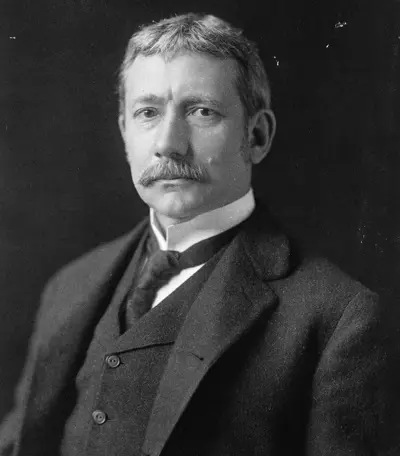
Elihu Root was an American lawyer and statesman who served as Secretary of State under President Theodore Roosevelt and as Secretary of War under Roosevelt and President William McKinley. He moved frequently between high-level appointed government positions in Washington, D.C. and private-sector legal practice in New York City. For that reason, he is sometimes considered to be the prototype of the 20th century political "wise man", advising presidents on a range of foreign and domestic issues. He was elected by the state legislature as a U.S. Senator from New York and served one term, 1909–1915. Root was awarded the Nobel Peace Prize in 1912.
