John C. Calhoun Quotes
The cohesive power of public plunder.
John C. Calhoun, 1782-1850, Vice President of the United States (Democrat, SC), U. S. Congressman & Senator (Democrat, SC), Speech, May 27, 1836
Sourced by: Eigen's Political and Historical Quotations


Although the Professor was often right about this technique, at the time he made this statement, the Clinton administration was actually cutting spending and using much of the revenue to pay for the deficit—just the opposite of what the Professor was worried about. It was successful and the deficit was eliminated and surpluses were projected. However the succeeding administration more closely followed the professor’s pattern and increased spending enormously for serious needs, but also cut taxes, so that we went during the Bush administration from the largest projected surplus in American history to the greatest deficit in American history.


At the time, Root was a Senator from New York and was trying to eliminate the large number of patronage jobs, most of which were not even real jobs—just payment. These developed the name of “No Show Jobs.”


It was very common to have tax collectors take a percentage of their collections as a commission and to be able to appoint sub tax collectors who also took commissions. On top of that, most tax collectors underreported the amount that they collected and pocketed the difference. At the time, Spain was worse than most Christian nations.


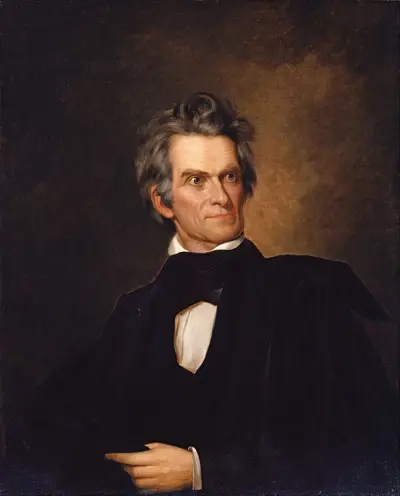
John Caldwell Calhoun was an American politician and political theorist from South Carolina who held many important positions including being the seventh vice president of the United States from 1825 to 1832, while adamantly defending slavery and protecting the interests of the white South when its residents were outnumbered by Northerners. He began his political career as a nationalist, modernizer, and proponent of a strong national government and protective tariffs. In the late 1820s, his views changed radically, and he became a leading proponent of states' rights, limited government, nullification, and opposition to high tariffs. He saw Northern acceptance of those policies as a condition of the South remaining in the Union. His beliefs and warnings heavily influenced the South's secession from the Union in 1860–1861.
