Muhammad Quotes
They shall not reveal any parts of their bodies, except that which is necessary.
Muhammad, 571-632, Prophet and Founder of Islam, Koran, 24:31
Sourced by: Eigen's Political and Historical Quotations


This was another historical reality that shocked traditionalists. There was nothing in the Koran or Islamic scripture requiring women to wear veils and burkas. Many Muslims and non-Muslims, to this day, do not realize that.

This is the famous sura that has been interpreted to require women to be covered, wear the chador or burka completely covering them or just a headscarf as other Muslims interpret it. Note that a literal reading does not require complete covering. Fundamentalists in Islam do not only rely on the precise literal statement through they would never dispute it. But many would believe that it is metaphorical for not revealing anything that might be stimulating to men. The sura goes on to list those male relatives who are exempted. These are the same as those where marriage is forbidden.


He is often referred to as The Reformer as he was a modernist. In particular, the told his people that there was no religious obligation is Islam for wearing a veil or a burka. These are just customs. Yet most Muslims still believe that veils and burkas were required by God. The only Koranic statement on the subject simply says that women should dress modestly. Despite his efforts, veils and burkas are still required by most Afghani families and most people think the requirement is religious.

The burqa wearing practice was outlawed by French Law.


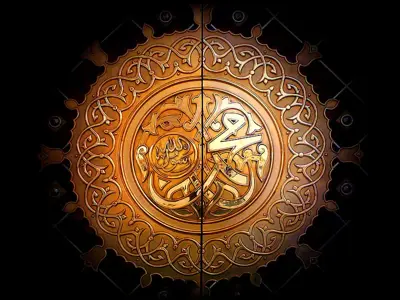
Muhammad was an Arab religious, social, and political leader and the founder of Islam. According to Islamic doctrine, he was a prophet, sent to preach and confirm the monotheistic teachings of Adam, Abraham, Moses, Jesus, and other prophets. He is believed to be the final prophet of God in all the main branches of Islam, though some modern denominations diverge from this belief. Muhammad united Arabia into a single Muslim polity, with the Quran as well as his teachings and practices forming the basis of Islamic religious belief.
