Eleanor Roosevelt Quotes
… they are terrified lest the Constitution be interpreted as it was meant to be interpreted in each age according to that period's own ideas instead of those of the past generation. It seems to me it would be more intelligent to be afraid lest we strangle democracy by letting a fossilizing process harden the Constitution into a cocoon which must be violently broken because it could not grow with the life within. Life implies growth, and the Constitution was never meant to be used as the Bible was by our most puritanical Puritans.
Eleanor Roosevelt, 1884-1962, First Lady (Franklin Delano Roosevelt), U. S. Delegate to the United Nations, Commenting upon some of the Conservatives of the day who argued that Congress may not legislate about child labor, Column, My Day, February 13, 1937
Sourced by: Eigen's Political and Historical Quotations


The quotation he gives from the first Chief Justice is from McCulloch v. Maryland, 1819. The issue is one that has divided jurists and politicians ever since the Constitution was ratified was should it be interpreted literally giving credence only to that which the framers specifically intended or as Hughes, Marshall and most modern interpreters believe that the principles should be interpreted in the light of the times. The Founding Fathers never envisaged an Internet or a potential enemy who could kill millions of Americans without sending large contingents of soldiers to our shores.


The argument was Prohibition, the 18th Amendment.

The Chief Justice at the time was an ultra-conservative judge, who together with his 8 colleagues—all conservative—had blocked much of the democratic and progressive legislation that the Congress had passed. FDR had a much different legal and philosophical view of the Constitution than the Chief Justice, and the court would declare much of his New Deal legislation, passed in the emergency of the Great Depression, unconstitutional. Almost all of those “unconstitutional” things were years later passed again and this time a more modern court found they were Constitutional.


Referring to the Brown v. Board of Education, the Topeka, KS, Supreme Court school desegregation decision:
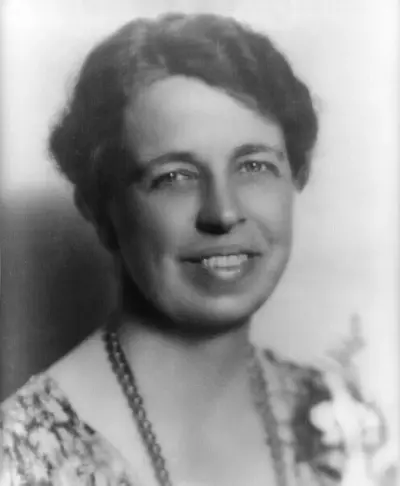
Anna Eleanor Roosevelt was an American political figure, diplomat and activist. She served as the First Lady of the United States from March 4, 1933, to April 12, 1945, during her husband President Franklin D. Roosevelt's four terms in office, making her the longest-serving First Lady of the United States. Roosevelt served as United States Delegate to the United Nations General Assembly from 1945 to 1952. President Harry S. Truman later called her the "First Lady of the World" in tribute to her human rights achievements.
