Antonin Scalia Quotes
I used to say that the Constitution is not a living document. It's dead, dead, dead. But I've gotten better. I no longer say that. The truth is that the Constitution is not one that morphs. It's an enduring Constitution, not a changing Constitution. That is what I've meant when I've said that the Constitution is dead.
Scalia, Antonin. Speech at Southern Methodist University. Dedman School of Law, Dallas, TX, 28 Jan. 2013.


The quotation he gives from the first Chief Justice is from McCulloch v. Maryland, 1819. The issue is one that has divided jurists and politicians ever since the Constitution was ratified was should it be interpreted literally giving credence only to that which the framers specifically intended or as Hughes, Marshall and most modern interpreters believe that the principles should be interpreted in the light of the times. The Founding Fathers never envisaged an Internet or a potential enemy who could kill millions of Americans without sending large contingents of soldiers to our shores.

The argument was Prohibition, the 18th Amendment.


This quotation is particularly important because it summarizes one of two opposite schools or thought regarding judicial interpretation of the Constitution that politicians have been arguing about since the Supreme Court first sat. The other is Original Intent where only the original intentions of the writers and ratifiers of the Constitution should be considered—assuming that it can be determined.


Referring to the Brown v. Board of Education, the Topeka, KS, Supreme Court school desegregation decision:


The Chief Justice at the time was an ultra-conservative judge, who together with his 8 colleagues—all conservative—had blocked much of the democratic and progressive legislation that the Congress had passed. FDR had a much different legal and philosophical view of the Constitution than the Chief Justice, and the court would declare much of his New Deal legislation, passed in the emergency of the Great Depression, unconstitutional. Almost all of those “unconstitutional” things were years later passed again and this time a more modern court found they were Constitutional.


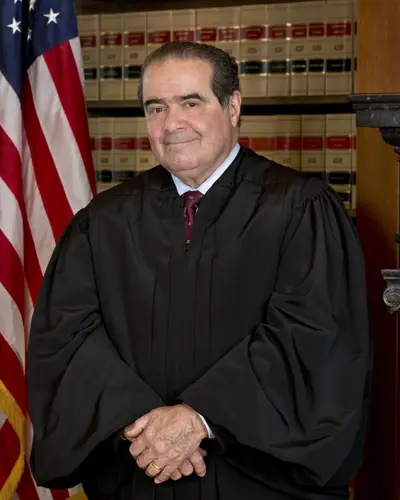
Antonin Gregory Scalia was an American jurist who served as an associate justice of the Supreme Court of the United States from 1986 until his death in 2016. He was described as the intellectual anchor for the originalist and textualist position in the Court's conservative wing. For catalyzing an originalist and textualist movement in American law, he has been described as one of the most influential jurists of the twentieth century, and one of the most important justices in the Supreme Court's history. Scalia was posthumously awarded the Presidential Medal of Freedom in 2018 by President Donald Trump, and the Antonin Scalia Law School at George Mason University was named in his honor.
