Edward Everett Quotes
There were speeches made in Congress in the very last session before the outbreak of the Rebellion, so ferocious as to show that their authors were under the influence of a real frenzy.
Everett, Edward. An Oration Delivered on the Battlefield of Gettysburg, November 19, 1863. Baker & Godwin, 1863, p. 43.

Describing the bitter situation when Theodore Roosevelt contested William Howard Taft for the Republican 1912 presidential nomination:

This is a wonderful quotation which illustrates the polarization which had taken place in America as a result of the slavery issue. Lincoln’s address—which history and most people have adjudged to be such a moderate attempt to find common ground, and which offended many of his constituents because he was compromising and temporizing on the slavery issue—was seen as the radical attacks of a “fanatic”. There is probably no policy that Lincoln or any other President could have followed that would be even marginally acceptable to the slave owners and their economies and the abolitionists and their economies. In the final analysis, slavery was the kind of issue that is not susceptible to compromise. No nation can exist half slave and half free. The Civil War was inevitable unless the South would give up slavery or the North would accept it.


Partisanship had reached a heated pitch like America at the beginning of the 21st century. Note that she used the term “violence” to describe verbal assaults. Joseph Hume was the leader of the Radical Party.

This quotation illustrates degree of hatred that the French had for the English for the hundreds of years of their European superpower rivalry.


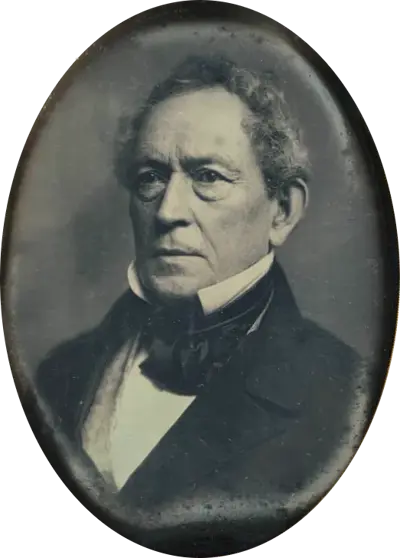
Edward Everett was an American politician, pastor, educator, diplomat, and orator from Massachusetts. Everett, as a Whig, served as U.S. Representative, U.S. Senator, the 15th Governor of Massachusetts, Minister to Great Britain, and United States Secretary of State. He also taught at Harvard University and served as its president.
