Murray Bookchin Quotes
We don't have to go around as the Protestant reformation did, or as the socialist revolution did, and execute each other as soon as we are successful - assuming we'll ever be successful.
Bookchin, Murray. "Interview with Murray Bookchin." Reason, Oct. 1979.


He was referring to the public unrest and dissatisfaction when an middle, poor or impoverished class is ground down by rigid interpretation and contract laws so that people in debt can rarely get out. He argues that this was a stark reality before most revolutions and a primary cause.


Muslim League leaders wanted to stir up India's Muslims in order to prevent Indian Independence from Britain unless India were partitioned and the Muslims could have their own nation. At that point the British and the Congress Party of India—the majority political party were both starting to plan for independence. Most of the Muslim nationalists did not want to have any Muslims living in a Majority Hindu nation. To stop it, they first used fear claiming that when the British left, the Hindus would massacre all the Muslims. They galvanized the Muslims to first attack the Hindus to dissuade then from their attacks which at that point were imaginary except in the conspiracy theory of the Muslim League. The moral logic of this statement was similar, albeit not to the same bloody degree, as the famous quotation of Presidential Candidate Barry Goldwater on extremism." H. S. Suhrawardy
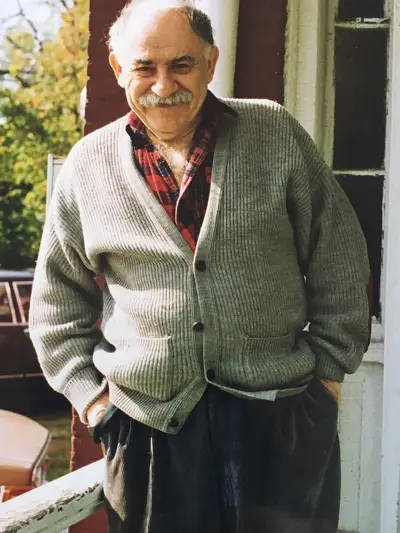
Murray Bookchin was an American anarchist, political philosopher, trade-union organizer, and educator. A pioneer in the environmental movement, Bookchin formulated and developed the theory of social ecology and urban planning, within anarchist, libertarian socialist, and ecological thought. He was the author of two dozen books covering topics in politics, philosophy, history, urban affairs, and social ecology. Among the most important were Our Synthetic Environment (1962), Post-Scarcity Anarchism (1971), The Ecology of Freedom (1982) and Urbanization Without Cities (1987). In the late 1990s, he became disenchanted with what he saw as an increasingly apolitical "lifestylism" of the contemporary anarchist movement, stopped referring to himself as an anarchist, and founded his own libertarian socialist ideology called communalism, which seeks to reconcile Marxist and anarchist thought.
