James Rosenquist Quotes
There was one reviewer from the 'New York Times,' I forget his name, who said I was 'death warmed over.' I wrote him back that I knew more about death than he did. The 'Times' fired him, put him in the cooking department!
Rosenquist, James, and David Dalton. Painting Below Zero: Notes on a Life in Art. Alfred A. Knopf, 2009.


The Minister equates the unintended consequences of war and civilian casualties with a terrorist retaliation which has as its purpose the killing of as many civilians as possible. The proliferation of terrorism complicated the ethics of counter terrorism. In the case of Palestinian terrorists their tactics included using civilian facilities---schools, hospitals, homes---from which to launch rocket attacks or to store weapons or hide terrorists. Under international laws of war, a civilian facility and the civilians in it become legitimate military targets the minute that weapons are stored in or fired from that location or that location is used for planning, training, equipping or manufacturing of military material. Palestinian terrorists claim that even though civilians were harmed in legitimate, legal attacks on military targets, a proper response is to send suicide bombers into civilian areas and preparing the explosives with nails and rat poison to cause as much pain as possible.


This proverb only makes sense in the light of understanding the Arab concept of revenge—“blood.” In a rural desert environment where little can be expected of government, the Arabs have developed a law enforcement and peace keeping mechanism which while primitive from modern standards, nevertheless worked to some degree. It is that revenge—“blood” is a moral necessity and obligation of all people, and revenge is not limited by time or to the individuals involved in the first incidence. The immediate family are the first to exact revenge, but the extended family follows and often the entire clan. Sometimes revenge is tribal or even national. Anyone who fails to revenge a member in his group is not only a disgrace, but is a clear and present danger to the group because then they can be attacked with impunity. So revenge is a strong obligation of the group members and blood must be paid with blood no matter how many generations it may take. The only thing that keeps me and my family safe, is the surety what whosoever kills one of us will themselves be killed or if they die a natural death we will take revenge on one of the evildoers relatives and no one is exempt. Crime must never pay!


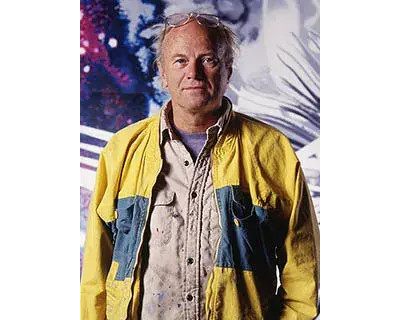
James Rosenquist was an American artist and one of the proponents of the pop art movement. Drawing from his background working in sign painting, Rosenquist's pieces often explored the role of advertising and consumer culture in art and society, utilizing techniques he learned making commercial art to depict popular cultural icons and mundane everyday objects. While his works have often been compared to those from other key figures of the pop art movement, such as Andy Warhol and Roy Lichtenstein, Rosenquist's pieces were unique in the way that they often employed elements of surrealism using fragments of advertisements and cultural imagery to emphasize the overwhelming nature of ads. He was a 2001 inductee into the Florida Artists Hall of Fame.
