Cornelius Vanderbilt Quotes
You have undertaken to cheat me. I won't sue you, for the law is too slow. I'll ruin you.


Blair had just led his party to its third successive election win—a new record for that party. Galloway, had campaigned against Blair and the Labor Party and had beaten the Labour MP in his district which was predominantly Muslim and had been vehemently opposed to the Iraq War.


The Minister equates the unintended consequences of war and civilian casualties with a terrorist retaliation which has as its purpose the killing of as many civilians as possible. The proliferation of terrorism complicated the ethics of counter terrorism. In the case of Palestinian terrorists their tactics included using civilian facilities---schools, hospitals, homes---from which to launch rocket attacks or to store weapons or hide terrorists. Under international laws of war, a civilian facility and the civilians in it become legitimate military targets the minute that weapons are stored in or fired from that location or that location is used for planning, training, equipping or manufacturing of military material. Palestinian terrorists claim that even though civilians were harmed in legitimate, legal attacks on military targets, a proper response is to send suicide bombers into civilian areas and preparing the explosives with nails and rat poison to cause as much pain as possible.

Haldeman had actually called the network executives on several occasions regarding Cavett’s show. Nixon was particularly furious when Cavett interviewed John Kerry, the decorated soldier who had thrown his medals away in protest to the handling of the Vietnam War. Nixon wanted some stronger actions taken.

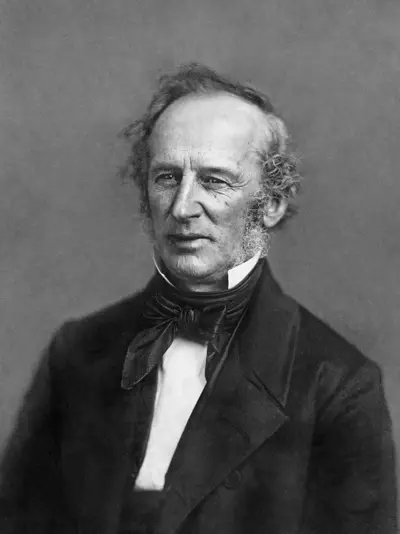
Cornelius Vanderbilt was an American business magnate who built his wealth in railroads and shipping. After working with his father's business, Vanderbilt worked his way into leadership positions in the inland water trade and invested in the rapidly growing railroad industry. Nicknamed "The Commodore", he is known for owning the New York Central Railroad. His biographer T. J. Stiles says, "He vastly improved and expanded the nation's transportation infrastructure, contributing to a transformation of the very geography of the United States. He embraced new technologies and new forms of business organization, and used them to compete....He helped to create the corporate economy that would define the United States into the 21st century."
