Joe Lieberman Quotes
There should be no partisanship in war. We’re in a war where the enemy wants to kill all of us—Democrats as well as Republicans.
Joseph I. Lieberman, Connecticut Attorney General, U. S. Senator (Democrat, CT), CNN Late Edition, February 12, 2006
Sourced by: Eigen's Political and Historical Quotations

The nation was facing the scourge of McCarthyism. Senator Smith was the most courageous member of the Senate in denouncing the lying demagogue of her own party who was so powerful at the time—Joseph R. McCarthy. At the same time, there were some communists trying to undermine the values or the nation as well as the fascists. Smith was one of the first to recognize the danger of both.


Theodore Roosevelt was the Presidential nominee

This had been a general, bipartisan principle from WWII through the Gulf War, but in the War on Terrorism, President George W. Bush and his administration deviated from the traditional American view and accused those who were criticizing their counter terrorism of aiding and abetting the enemy and attacked the loyalty and patriotism of their critics.

See {633112} for his most famous quotation on the subject.


This historic speech is regarded as one of the most important in Australia's history, marking a turning point in Australia's relationship with its founding country, the United Kingdom. Many felt that Prime Minister Curtin was abandoning Australia's traditional ties to the British Isles. -- Wikipedia

Not only were the Democratic and Republican Parties at odds, but both political parties were split with the different factions very hostile to each other. The Populists and the Progressives were putting great pressure in the Democrats, and the Corporate Republicans strongly and often viscously opposed President Roosevelt. America was politically fractionated. Roosevelt called for a comity and unity which never took place.
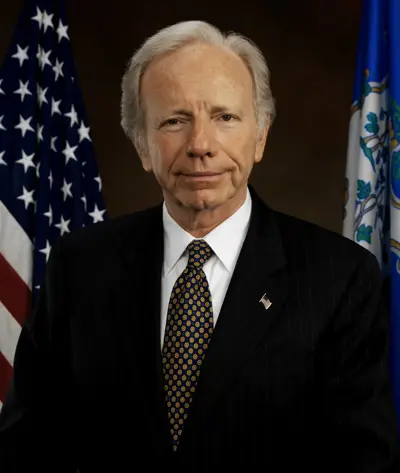
Joseph Isadore Lieberman is an American politician, lobbyist and attorney who served as a United States Senator from Connecticut from 1989 to 2013. A former member of the Democratic Party, he was its nominee for Vice President of the United States in the 2000 election. During his final term in office he was officially listed as an independent Democrat and caucused with and chaired committees for the Democratic Party.
