Harry Johnston Quotes
There is or there has been in the past much selfishness in the northern White man's motives in opening up Africa, and in his interference in the disorders of the Black man or the Brown.
Henry ‘Harry’ Hamilton Johnston, 1858-1927, British explorer, botanist, and colonial administrator, “Race Problems in the New Africa”, Foreign Affairs, June 1924
Sourced by: Eigen's Political and Historical Quotations


Salisbury was Foreign Minister at the time.

Exploring large parts of Africa

The king was right about the eventuality but wrong about his ability to keep his kingdom during his lifetime. The Arabs displaced him shortly thereafter. Mwanga was a notorious tyrant who constantly had his own people tortured and murdered. See Fredrick Holmwood.


The highway was planned to go through a poor neighborhood which had a high percentage of Black residents—all of whom would have to find other housing and move to make room for the highway. If the government plans a highway through a wealthy area, the cost to condemn and pay for the land will be much greater than if a poor neighborhood is acquired. For urban highways, the poor almost always bear a disproportionate share of the inconvenience while the major benefit inures to the wealthy and middle class. Abbot had been a labor organizer and a professional artist before he entered politics. The graphic is of his famous poster which by itself stopped the plans to build the highway very quickly.

this is a joke Tutu has used, but variants of it exist which are not original to him.
Parker and other escaped slaves in Christiana fought off slave catchers and killed the slave owner leading them. Charged with treason, he escaped to Canada with his family and lived there the rest of his life. While not a polished writer, after he himself had escaped and went to Christiana and leaned to read and write. He wrote this narrative of his life as a slave—one of the few written works we have from slaves.


This was published after he had been murdered by the Afrikaner White South African authorities. The text illustrates his pointed criticisms that had so embarrassed and enraged the apartheid government.
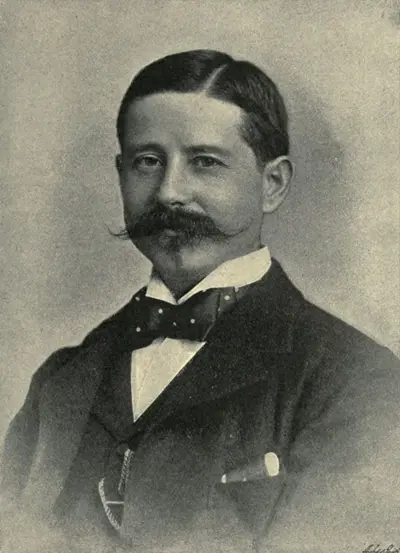
Sir Henry Hamilton Johnston GCMG KCB, known as Harry Johnston, was a British explorer, botanist, artist, colonial administrator, and linguist who traveled widely in Africa and spoke many African languages. He published 40 books on African subjects and was one of the key players in the Scramble for Africa that occurred at the end of the 19th century.
