Sabine Baring-Gould Quotes
There is no myth relative to the manners and customs of the English that in my experience is more tenaciously held by the ordinary Frenchman than that the sale of a wife in the market-place is an habitual and an accepted fact in English life.
Baring-Gould, Sabine. Devonshire Characters and Strange Events. John Lane The Bodley Head Ltd, 1908, p. 58.

He was unfamiliar with a similar custom in Bohemia. See {610974}.


This is a very interesting historical quotations in that it describes the family culture of an important subset of Americans in the early 19th century. The Duena (chaperone) was a middle aged woman who would always accompany young, unmarried women whenever they left the home. A young man who would take a young lady for a carriage ride or anything else, would also have to take the duena.


This was the decision that sanctioned anti-polygamy laws.


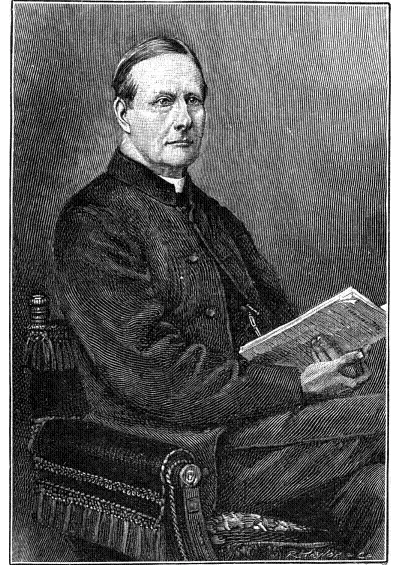
The Reverend Sabine Baring-Gould of Lew Trenchard in Devon, England, was an Anglican priest, hagiographer, antiquarian, novelist, folk song collector and eclectic scholar. His bibliography consists of more than 1,240 publications, though this list continues to grow. His family home, the manor house of Lew Trenchard, near Okehampton, Devon, has been preserved as he had it rebuilt and is now a hotel. He is remembered particularly as a writer of hymns, the best-known being "Onward, Christian Soldiers", "Sing Lullaby", and "Now the Day Is Over". He also translated the carol "Gabriel's Message" from the Basque language to English.
