Aeschylus Quotes
There is no disgrace in an enemy suffering ill at an enemy's hand, when you hate mutually.
Aeschylus. Prometheus Bound. Translated by Herbert Weir Smyth, Harvard University Press, 1926, lines 1041-1042.


The nation was in the midst of a major steel strike and the President felt that the steel companies had reneged on their promises:


The Minister equates the unintended consequences of war and civilian casualties with a terrorist retaliation which has as its purpose the killing of as many civilians as possible. The proliferation of terrorism complicated the ethics of counter terrorism. In the case of Palestinian terrorists their tactics included using civilian facilities---schools, hospitals, homes---from which to launch rocket attacks or to store weapons or hide terrorists. Under international laws of war, a civilian facility and the civilians in it become legitimate military targets the minute that weapons are stored in or fired from that location or that location is used for planning, training, equipping or manufacturing of military material. Palestinian terrorists claim that even though civilians were harmed in legitimate, legal attacks on military targets, a proper response is to send suicide bombers into civilian areas and preparing the explosives with nails and rat poison to cause as much pain as possible.


Jackson had been wounded by the British in the American Revolution. Later he led the defeat of the British in New Orleans in the War of 1812.


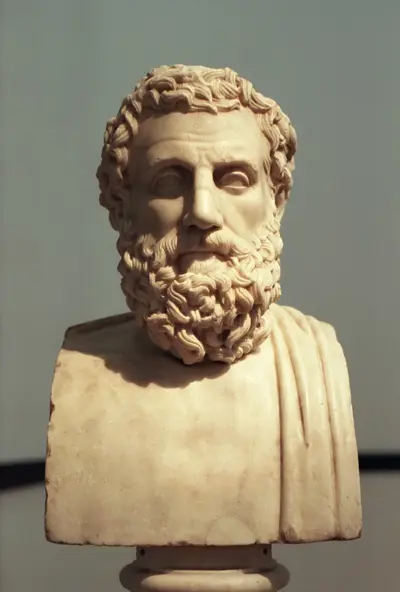
Aeschylus (UK: /ˈiːskɪləs/, US: /ˈɛskɪləs/; Greek: Αἰσχύλος Aiskhylos, pronounced [ai̯s.kʰý.los]; c. 525/524 – c. 456/455 BC) was an ancient Greek author of Greek tragedy, and is often described as the father of tragedy. Academics' knowledge of the genre begins with his work, and understanding of earlier Greek tragedy is largely based on inferences made from reading his surviving plays. According to Aristotle, he expanded the number of characters in the theatre and allowed conflict among them. Before this, characters interacted only with the chorus.
