Thomas Szasz Quotes
There is a fundamental similarity between the persecution of individuals who engage in consenting homosexual activity in private, or who ingest, inject, or smoke various substances that alter their feelings and thoughts - and the traditional persecution of men for their religion... What all of these persecutions have in common is that the victims are harassed by the majority not because they engage in overtly aggressive or destructive acts... but because their conduct or appearance offends a group intolerant to and threatened by human differences.
Szasz, Thomas. The Manufacture of Madness: A Comparative Study of the Inquisition and the Mental Health Movement. Harper & Row, 1970.


Michener had chaired a county campaign committee and discovered that most great amount of the virulent, anti-Catholic, messages and materials that impinged on the campaign were tax-exempt religious publications and church newsletters.


The King, a religious exremist fanatic, was a great supporter of the Inquisition whose excesses were horrible during his reign.

A Capuchin monk and his Muslim servant had disappeared from the streets of Damascus just before the Jewish Passover. A rumor got started that Jews had kidnapped and murdered them so that they could use their blood in making the traditional Passover matzoh. This was an old disproven canard from the Middle Ages. This absurd lie, which persists in some Islamic nations, was referred to as the “Blood Libel”. However many Jews were rounded up and jailed with calls for their execution. Protests were made by countries the world over. Van Buren mobilized the American diplomatic machinery in one of America’s first coordinated diplomatic campaigns in defense of human rights. Instructions were sent to American diplomats in Turkey and Egypt to strongly send the American message and position. It was successful. See {613362}.

Islam forbids homosexuality and Sharia (Islamic religious law) prescribes death as the penalty for homosexuality. At that time Iran was a Muslim theocracy and if there were overt homosexuality that was officially discovered, the heretics would be killed. The logic of the government was that since they had killed the homosexuals, there were none left. At the same time all the research showed that while Muslim homosexuality was slightly less than Christian, it was still quite significant in all Muslim cultures that had been studied. If the President was to be believed, Iran was the only exception.


This quotation which appears absurd on the surface given Iran’s terrible record with religious minorities provides insight to Islamic orthodox thought. For the orthodox Muslim, Sharia—Koranic Law—is the basis of the society. God defines the rights of people and their obligations. Whatever rights are provided by Sharia, Khomeini and some others wished to provide them equally to religious minorities also. However, those rights do not include the right to criticize the Islamic law or the leaders who implement it. That would be heresy if done by a Muslim, a Christian, or a Jew. A Christian church may not erect a public cross or ring bells on Sunday. That is prohibited by the Koran and is imposed on all. Bahai religious adherents are tracked down in the Islamic Republic and are often executed. ‘What about their rights?’ they ask. The answer is that the Bahai were Muslims who have become “backsliders” and heretics, and under Sharia, they must be executed for heresy; they are deemed to be heretical Muslims and not members of a minority religion.


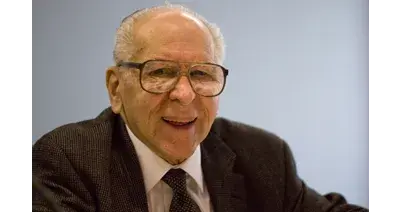
Thomas Stephen Szasz was a Hungarian-American academic, psychiatrist and psychoanalyst. He served for most of his career as professor of psychiatry at the State University of New York Upstate Medical University in Syracuse, New York. A distinguished lifetime fellow of the American Psychiatric Association and a life member of the American Psychoanalytic Association, he was best known as a social critic of the moral and scientific foundations of psychiatry, as what he saw as the social control aims of medicine in modern society, as well as scientism. His books The Myth of Mental Illness (1961) and The Manufacture of Madness (1970) set out some of the arguments most associated with him.
