Ludwig von Mises Quotes
The worst and most dangerous form of absolutist rule is that of an intolerant majority.
Ludwig von Mises, 1881-1973, Austrian Economist & Political Philosopher, Omnipotent Government
Sourced by: Eigen's Political and Historical Quotations

Prevented by the Military from ever taking office. She was commenting on recent attacks against minority Muslims by the majority Buddhists and one of the major reasons she claimed was the lack of trust in the Muslim community that had developed during the period of military dictatorship.


Arguing the need to limit the power of the legislature:


See Louis Brandeis for a later judicial interpretation of this view.

Eggleston was an accomplished writer who had served in the Confederate army of the Civil War. 20 year after the war he wrote a series of articles for the prestigious Northern Atlantic Monthly trying to convey the war from the Southerner’s point of view.

At the time of this statement most people thought that Bush was joking. But by the end of his Presidency many looked back on the quote and thought that Bush had such preferences. He unilaterally took the country into the Iraq War and assumed Presidential Powers that no other president had ever attempted. Most serious, his administration actually took the formal legal position that the President did not have to obey the law if he unilaterally thought that it was not in the nation’s interest from the point of view of the Commander in Chief. So many debate whether this quotation was a light hearted joke of a harbinger of his real feelings about the Presidency.


FDR was a marvelous judge of men and their character. De Gaulle could not separate himself from France and pushed the French Republic towards one man rule (himself) as much as anyone since Napoleon Bonaparte.


Nine years later he was responsible for Napoleon’s election as Consul.
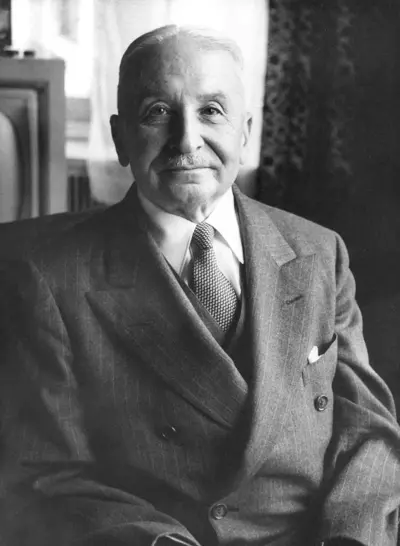
Ludwig Heinrich Edler von Mises was an Austrian School economist, historian, logician and sociologist. Mises wrote and lectured extensively on the societal contributions of classical liberalism. He is best known for his work on praxeology, a study of human choice and action.
