Friedrich Hayek Quotes
There exists no third principle for the organisation of the economics process which can be rationally chosen to achieve any desirable ends, in addition to either a functioning market in which nobody can conclusively determine how well-off particular groups or individuals will be, or a central direction where a group organised for power determines it.
Hayek, Friedrich A. Law, Legislation and Liberty, Volume 2: The Mirage of Social Justice. University of Chicago Press, 1976.


One advantage to a political system of allowing the free markets to allocate resources is that the politicians do not have to make almost endless decisions about what is right, what is wrong, who should get what, etc. The difficulty is that in some areas like health the market economy breaks down because there is no limit on what humans would pay for the health and welfare of their children and other loved ones. Then there are areas where the market for whatever reasons, produce a set of results that the vast majority of the society believes is unfair or detrimental to society in general, like gender wage discrimination and tweaking the market cannot improve the situation. However, if market reasoning is eliminated from government, there is endless contention and polarization—which some argue we have come to even with market reasoning in most areas. Market reasoning, of course, assumes competition, and a large part of the American economy is controlled by companies that have monopolies (legal and illegal) and duopolies or oligopolies like oil refining, airlines, internet ISP provisioning.


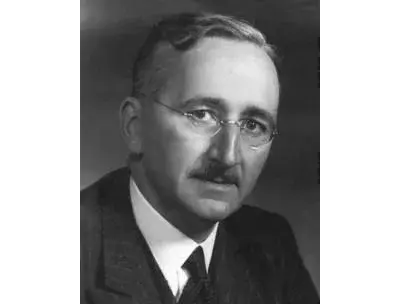
Friedrich August von Hayek CH FBA, often referred to by his initials F. A. Hayek, was an Austrian-British economist and philosopher who is best known for his defence of classical liberalism. Hayek shared the 1974 Nobel Memorial Prize in Economic Sciences with Gunnar Myrdal for his "pioneering work in the theory of money and economic fluctuations and [...] penetrating analysis of the interdependence of economic, social and institutional phenomena". His account of how changing prices communicate information that helps individuals co-ordinate their plans is widely regarded as an important achievement in economics, leading to his Nobel Prize.
