Francis Fukuyama Quotes
Economic activity is carried out by individuals in organisations that require a high degree of social co-operation
Fukuyama, Francis. Trust: The Social Virtues and the Creation of Prosperity. Free Press, 1995.


One advantage to a political system of allowing the free markets to allocate resources is that the politicians do not have to make almost endless decisions about what is right, what is wrong, who should get what, etc. The difficulty is that in some areas like health the market economy breaks down because there is no limit on what humans would pay for the health and welfare of their children and other loved ones. Then there are areas where the market for whatever reasons, produce a set of results that the vast majority of the society believes is unfair or detrimental to society in general, like gender wage discrimination and tweaking the market cannot improve the situation. However, if market reasoning is eliminated from government, there is endless contention and polarization—which some argue we have come to even with market reasoning in most areas. Market reasoning, of course, assumes competition, and a large part of the American economy is controlled by companies that have monopolies (legal and illegal) and duopolies or oligopolies like oil refining, airlines, internet ISP provisioning.

Most classic socialists would not agree, but Deng’s approach created the most economically successful socialist economy in history.


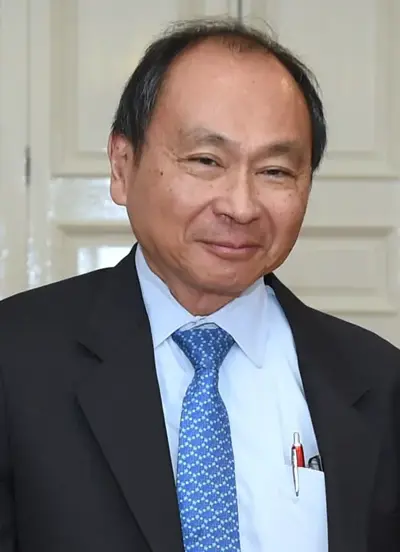
Yoshihiro Francis Fukuyama is an American political scientist, political economist, and writer. Fukuyama is known for his book The End of History and the Last Man (1992), which argues that the worldwide spread of liberal democracies and free-market capitalism of the West and its lifestyle may signal the end point of humanity's sociocultural evolution and become the final form of human government. However, his subsequent book Trust: Social Virtues and Creation of Prosperity (1995) modified his earlier position to acknowledge that culture cannot be cleanly separated from economics. Fukuyama is also associated with the rise of the neoconservative movement, from which he has since distanced himself.
