Michael Sandel Quotes
In its own way, market reasoning also empties public life of moral argument. Part of the appeal of markets is that they don’t pass judgment on the preferences they satisfy.
One advantage to a political system of allowing the free markets to allocate resources is that the politicians do not have to make almost endless decisions about what is right, what is wrong, who should get what, etc. The difficulty is that in some areas like health the market economy breaks down because there is no limit on what humans would pay for the health and welfare of their children and other loved ones. Then there are areas where the market for whatever reasons, produce a set of results that the vast majority of the society believes is unfair or detrimental to society in general, like gender wage discrimination and tweaking the market cannot improve the situation. However, if market reasoning is eliminated from government, there is endless contention and polarization—which some argue we have come to even with market reasoning in most areas. Market reasoning, of course, assumes competition, and a large part of the American economy is controlled by companies that have monopolies (legal and illegal) and duopolies or oligopolies like oil refining, airlines, internet ISP provisioning.
Michael Sandel, Political Philosopher, “What Isn’t For Sale”, The Atlantic, April 2012
Sourced by: Eigen's Political and Historical Quotations

This explains much of the tension between the economic conservatives and the cultural conservatives of the Republican party. One advantage to a political system of allowing the free markets to allocate resources is that the politicians do not have to make almost endless decisions about what is right, what is wrong, who should get what, etc. The difficulty is that in some areas like health the market economy breaks down because there is no limit on what humans would pay for the health and welfare of their children and other loved ones. Then there are areas where the market for whatever reasons, produce a set of results that the vast majority of the society believes is unfair or detrimental to society in general, like gender wage discrimination and tweaking the market cannot improve the situation. However, if market reasoning is eliminated from government, there is endless contention and polarization—which some argue we have come to even with market reasoning in most areas. Market reasoning, of course, assumes competition, and a large part of the American economy is controlled by companies that have monopolies (legal and illegal) and duopolies or oligopolies like oil refining, airlines, internet ISP provisioning.


Most classic socialists would not agree, but Deng’s approach created the most economically successful socialist economy in history.


Arguing for less secrecy of the Federal Reserve Bank:

She was then the European Commissioner for Competition.


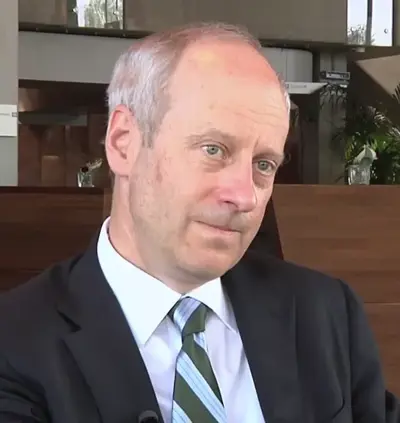
Michael Joseph Sandel (/sænˈdɛl/; born 1953) is an American political philosopher and the Anne T. and Robert M. Bass Professor of Government Theory at Harvard University Law School, where his course Justice was the university's first course to be made freely available online and on television. It has been viewed by tens of millions of people around the world, including in China, where Sandel was named the "most influential foreign figure of the year" 2011 (China Newsweek). He is also known for his critique of John Rawls' A Theory of Justice in his first book, Liberalism and the Limits of Justice (1982).
