James Bryant Conant Quotes
The whole proceeding was little more than a kangaroo court.
Description of Atomic Energy Commission hearings on the security status of Robert Oppenheimer. Robert Oppenheimer was the physicist who directed the development of the atomic bomb in the Manhattan project of World War II. After the war his views opposed some powerful political interests and they organized hearings to deny him a security clearance. Conant was a scientist who was the liaison between the highest levels of government and the staff at Los Alamos who were developing the bomb. Later, to make amends, Oppenheimer received the Fermi prize from the President.
James Bryant Conant, 1893-1978, U. S. High Commissioner for Germany, President, Harvard University, Description of Atomic Energy Commission hearings on the security status of Robert Oppenheimer, Quoted in Jennet Conant, 109 East Palace: Robert Oppenheimer and the Secret City of Los Alamos, 2005
Sourced by: Eigen's Political and Historical Quotations


This declaration, drafted by Russell and Einstein two days before Einstein’s death was signed by a number of other prominent scientists.

Under this initiative the US declassified and distributed technical, previously secret information, about atomic science to the world for scientific development. It has been very successful and there are few modern nations that have not benefitted from the program.


He and saome others were concerned that if most American citizens knew most of the details about terrorists and U. S. potential vulnerability to terrorism, many would be totally inhibited and American Society would become very insular and restrictive to the detriment of the nation and the economy. Critics argue that American's imagination stimulated by entertainment, journalism and literature was extreely robust and Americans nnetheless could handle the risks. And the secrecy even exacerbates the problem becasue there was no way to refute or curtain those who exaggerated the problem and the risks.


His wife also had a Doctorate in Chemistry—the 2nd woman to achieve that in Germany—and she was distraught that he had been the leading scientist developing not only the poison gas which the Germans introduced in WWI, but he also developed the tactics of use and personally went to the battlefield and supervised the first major gas attacks. This was much against the ethical value of most scientists and Jewish ethics in particular. Haber had been a close colleague of Albert Einstein and the Kaiser Wilhelm Institute, and while Einstein was trying to get scientists to sign a petition against the war, Haber was developing the first weapon of mass destruction. After Haber gave this response to his wife, we left to go to the front to supervise another major gas attack. His wife committed suicide. Haber, while a German national hero to militaristic Germany, never again had the kind of pre-war relationship that existed with Einstein and many other fellow scientists.

The lecture was on radium and the radioactivity that scientists had recently discovered. This appears to be the first time a scientist suggested the possibility of using atomic energy to produce a powerful weapon. At the same time, note that he also mentioned the possible destruction of the earth. “Heavy matter” referred to the elements—many of which had not yet been discovered—that had larger atomic numbers than radium like uranium.

Two days before Nagasaki was attacked by the second atomic bomb. Bohr was afraid of a nuclear arms race, and argued for the release of all scientific information. His suggestion went nowhere. There was a 50 year nuclear arms race.

The Scientific Project that developed the Atomic Bomb. Oppenheimer, like most sophisticated intellectuals and scientists of the time had acquaintances who were communists or Communist sympathizer in Oppenheimer's case his brother and wife were both members of communist organizations. They too severed their connections. At the time Russia was on major ally in the war against Hitler and fascism. However since the Communist Revolution of 1917 there had been an animus between the American and Russian governments. The work on the atomic bomb was so secret that everybody was a potential suspect and security risk, even our allies. In the final analysis it was a spy in the Manhattan project who was there as part of the British contribution to the project. The security people were chasing after all the scientists who had friends or acquaintances who were communists and missed the real spy who had no such connections.

3rd Earl Russell of Kingston


Their cultures, training and education are totally different, but most important their missions are intrinsically different. The security experts have failed if there is a single serious fatal accident or public exposure to a toxic or dangerous substance. The scientists know that they only way to eliminate all risk is to eliminate scientific research.


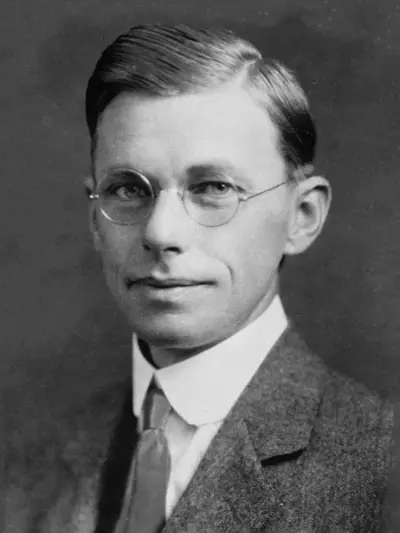
James Bryant Conant was an American chemist, a transformative President of Harvard University, and the first U.S. Ambassador to West Germany. Conant obtained a Ph.D. in Chemistry from Harvard in 1916. During World War I he served in the U.S. Army, working on the development of poison gases, especially Lewisite. He became an assistant professor of chemistry at Harvard in 1919 and the Sheldon Emery Professor of Organic Chemistry in 1929. He researched the physical structures of natural products, particularly chlorophyll, and he was one of the first to explore the sometimes complex relationship between chemical equilibrium and the reaction rate of chemical processes. He studied the biochemistry of oxyhemoglobin providing insight into the disease methemoglobinemia, helped to explain the structure of chlorophyll, and contributed important insights that underlie modern theories of acid-base chemistry.
