Herbert Henry Asquith Quotes
The War office kept three sets of figures - one to mislead the public, another to mislead the cabinet and the third to mislead itself.
Asquith, Herbert Henry. Memories and Reflections, 1852-1927. Vol. 2, Cassell and Company, 1928, p. 122.


Alsop, a political hawk was convinced, as many other right wingers were at the time that the Russians had forged ahead of us in offensive missiles. When he asked President Eisenhower, the President never denied it, but never went to Congress to ask for more money to close the “missile gap”. Alsop made this shocking accusation which offended many Americans, but pleased the ultra-hawks and anti-communists. Most of the nation however then believed that there was a missile gap, with varying explanations of Eisenhower’s silence on the matter. Two years later John F. Kennedy, used the “missile gap” when running in 1960 against Nixon by attacking Nixon and Eisenhower for allowing us to fall behind the Russians at have a missile gap. When Kennedy became President, he was very surprised that there was no missile gap favoring the Russians—it was favoring the United States. Eisenhower did not want the Russians to know that he knew exactly what they were producing and deploying in missiles through great espionage sources. By not saying anything in the face of the accusations, the Russians assumed that the Americans really thought that they had more capacity than they did. And Eisenhower wanted that so that they would be secure that the United States had no real knowledge of their missile capacity. If Eisenhower had actually told the nation that the Russians were really behind us, the Russians would suspect a security leak and our sources could be compromised.


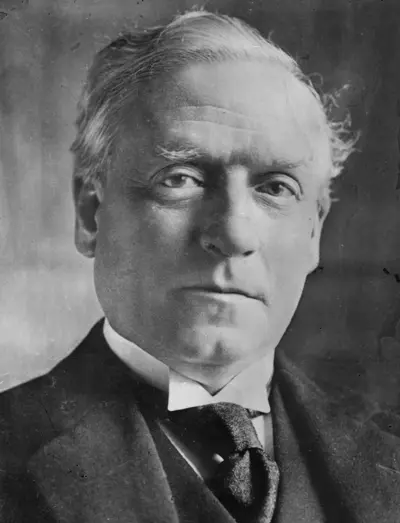
Herbert Henry Asquith, 1st Earl of Oxford and Asquith, KG, PC, KC, FRS was Prime Minister of the United Kingdom from 1908 to 1916. He was the last prime minister to lead a majority Liberal government, and he played a central role in the design and passage of major liberal legislation and a reduction of the power of the House of Lords. In August 1914, Asquith took Great Britain and the British Empire into the First World War. In 1915, his government was vigorously attacked for a shortage of munitions and the failure of the Gallipoli Campaign. He formed a coalition government with other parties, but failed to satisfy critics. As a result, he was forced to resign in December 1916, and he never regained power.
