Hjalmar Schacht Quotes
The very necessity of bringing our armament up to a certain level as rapidly as possible must place in the foreground the idea of as large returns as possible in foreign exchange and therewith the greatest possible assurance of raw material supplies, through exporting.
Schacht, Hjalmar. Quoted in Trials of the Major War Criminals Before the International Military Tribunal, International Military Tribunal, 1947.

In WWII 15 years later, the Japanese seized most of the natural rubber plantations, and the U. S. would have been in great trouble had not American industry expanded the technology developed by the Germans and the Russians in making synthetic rubber in 1931. Whitford’s warning had not been heeded and rubber was rationed throughout the Second World War.
This was an excellent prediction. Canada was one of the largest targets of American capital investment.


“Arsenal of Democracy” is the famous FDR phrase whereby America was able to provide weapons for the other democracies to fight Fascism. At the time, the United States had the greatest manufacturing capability of the world. When Gingrich made this quotation, much manufacturing that had been done in America had moved offshore. However, one area that did not move offshore was military weapons manufacturing where the United States manufacturing capability was thriving but America was the largest arms manufacturer in the world and exported much of its weapons. This quotation is an example of a political technique called “conflation.” Gingrich took an area where there was legitimate concern about the nation’s loss of manufacturing and implied that the problem was affecting our military and defense capability as well which was not do at all. However, while most Americans knew of the manufacturing job loss, they did not know that the defense manufacturing was the strongest in the world. So they became even more alarmed at the problem of general manufacturing loss.


Johnson was then the Assistant Secretary Of War.
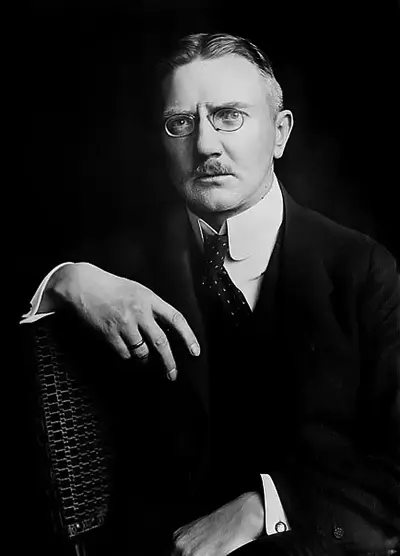
Hjalmar Schacht was a German economist, banker, centre-right politician, and co-founder in 1918 of the German Democratic Party. He served as the Currency Commissioner and President of the Reichsbank under the Weimar Republic. He was a fierce critic of his country's post-World War I reparation obligations.
