Richard Crossman Quotes
The USA is a better form of society than the USSR… To reject America as a capitalist country and to treat the Soviet Union as an example of socialist planning is to make nonsense of every one of our ideals.
Some on the extreme left of the Labor Party at the time were extolling Soviet Russia while denigrating the United States. Crossman, an avid socialist thought that was absurd and said so at every opportunity. The pro Soviet wing of the Labour party got smaller and smaller. He and many others thought that Russian Communism was a very poor implementation of socialist ideas.
Richard Crossman, 1907-1974, British Member of Parliament (Labour), Minister of Housing, Towards a Philosophy of Socialism., 1955
Sourced by: Eigen's Political and Historical Quotations


3rd Earl Russell of Kingston. He favored and argued for a middle ground of a capitalistic socialism or a socialized capitalism, which is what most democracies became.


In the 1970s both England and America had a red scare here some ultra conservatives actually feared that their populations would adopt and vote for communism. The intelligence was so bad that the more the Soviet Union was financially and politically collapsing, the more they were feared.


The Red Scare had already reached most conservatives and Truman and most others had not yet been affected by the fear of Communism that so many people had through the 1970s.


This quotation illustrates the statements of White that caused conservatives to dislike him. However, most historians agree that White passed classified information to the Russians. He was accused of being a Communist, but there was never any evidence of that. Some people believe that he was a spy for the Russians and committed espionage, but others disagree observing that White was very much his own man and felt that much information that was classified never should have been. White substituted his own judgment, it is believed, about what could be given to the Russians for the security system. He was an admirer of what Russian socialism had accomplished economically, educationally and medically since the 1917 revolution deposing the Czar. Russia had been a valuable military ally, which had taken the brunt of both military and civilian casualties in WWII. White’s economics were certainly not Marxist but very much Keynesian. He was subpoenaed by the House Un-American Activities Committee where he was accused of being a Communist which he denied (see {634907}). He died of a heart attack 3 days later.

Many of the far left grew disillusioned with the British Labor Movement and how it was relating to the capitalist companies, the government, and the workers. The Unions had become very undemocratic and controlling with the government pressuring both labor and companies to the degree that many felt that the institutions themselves were no longer free institutions. Ironically, they preferred the open competition of the American system at the time where unions and companies were free to fight out their differences.

At the time, the CIA was covertly financing and organizing opposition to Allende. Nonetheless, he won the election but the CIA organized a coup d’etat and removed him.

Socialism in its then pure form had the state owning and controlling all the major assets of the nation. In this sense it was contradictory to individual freedom and hence democracy. However, in the years after Tocqueville’s quotation and the industrial revolution, socialism has gradually moved away from state ownership and operations of all institutions and resources. Democracy has tended to adopt a more regulatory view to control the excesses of unbridled capitalism. The range of democratic nations by the 21st century encompassed differences but some were described as “social democracies” and had some state ownership but were basically capitalistic economies. Even the self-described Communist nations had become heavily capitalistic albeit with less political freedom. At the same time, even the United States—the epitome of 21st century capitalism, owned and controlled a few of the resources and means of production and tended to regulate the others—a substantial difference from the American democracy which Tocqueville studied.

The Italian Communists were culturally and ideologically very different from the Russian Communists. The Italian view was a more nationalistic one and was closer to a Socialist Democracy than a “dictatorship of the proletariat”. Much more tolerant of diversity and not as ideological. See {637829} as a big example of the difference. Yet this was still in the midst of the Red Scare in America and some other areas of the West. After WWII, the CIA had secretly spent millions to get Italians to vote for the non-Communist candidates and helped organize Italian anti-Communist politicians who didn’t want the Communists to alter the Italian government to reflect any Communist or Socialist ideas. Meanwhile, the Italian party was under great pressure from Russia and some of the other Communist satellite countries to adopt a hardline revolutionary communist programs. Berlinquer and other Italian Communist leaders had many misgivings about Russian style Communism and they had to play off one side against the other for years.

She was talking about the Soviet Union

Immediately after the Russian Revolution, the provisional government appointed him as Ambassador to the United States. However, the provisional government was supplanted when the Bolsheviks took over. Not enamored of Communism, he stayed in the United States with many other Russian refugees.


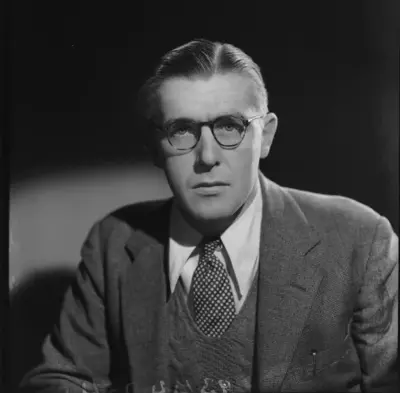
Richard Howard Stafford Crossman OBE, sometimes known as Dick Crossman, was a British Labour Party politician. A university classics lecturer by profession, he was elected a Member of Parliament in 1945 and became a significant figure among the party's advocates of Zionism. He was a Bevanite on the left of the party, and a long-serving member of Labour's National Executive Committee (NEC) from 1952.
