Harry S. Truman Quotes
The United States recognizes the provisional government as the de facto authority of the new State of Israel.
Truman, Harry S. "Statement by the President Recognizing the State of Israel," May 14, 1948. Public Papers of the Presidents of the United States: Harry S. Truman, 1948, U.S. Government Printing Office, 1964, p. 258.


Queen Victoria


Because the early nation's government was still in a state of becoming, foreign powers were hesitant to do business and conclude treaties with the newly-formed United States of America:

The document was signed in his name by his ministers.


1st Earl of Kingston. Foreign Minister at this time. This decision was a terrible blow to the South who had been trying desperately to obtain diplomatic recognition for the Confederacy from England and other world powers.

America initially withheld recognition of the 1917 Russian revolutionary government and joined a number of other nations in stationing troops around Russia. The fear of Marxism was the beginning of the Red Scare in America. Ironically, in the early years after the Russian revolution, Russia had a relatively democratic government. The dictatorship of a few at the head of the Communist Party had not yet evolved. Ironically, when we did recognize Russia again it was after it had gone through a short lived democratic period, and was in the hands of a dictatorial few. America and many other nations valued stability and predictability more so than democracy. Hearst was one of the few American notables who saw the hypocrisy of this.


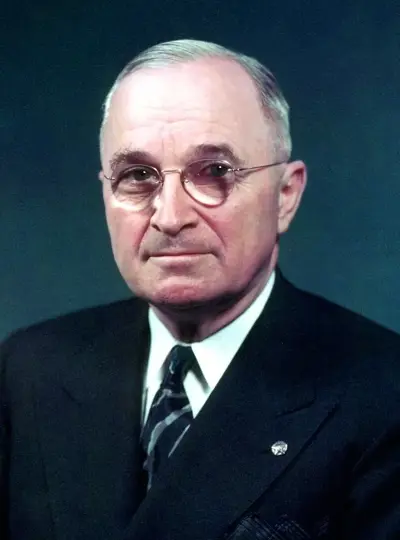
Harry S. Truman was an American politician who served as the 33rd President of the United States (1945–53). He served as a United States Senator from Missouri (1935–45) and briefly as Vice President (1945) before he succeeded to the presidency on April 12, 1945 upon the death of Franklin D. Roosevelt. He was president during the final months of World War II, and approved the plan to drop atomic bombs on Hiroshima and Nagasaki. Truman was elected in his own right in 1948. He presided over an uncertain domestic scene as America sought its path after the war and tensions with the Soviet Union increased, marking the start of the Cold War.
