Abba Eban Quotes
Nobody does Israel any service by proclaiming its 'right to exist.' Israel's right to exist, like that of the United States, Saudi Arabia and 152 other states, is axiomatic and unreserved. Israel's legitimacy is not suspended in midair awaiting acknowledgement.... There is certainly no other state, big or small, young or old, that would consider mere recognition of its 'right to exist' a favor, or a negotiable concession.
Eban, Abba. "Israel's Right to Exist." The New York Times, 18 Nov. 1981, p. A31.


This is an example of the 3 leading democratic powers refusing to recognize the will of the people in other nations in determining their leadership choice. King Constantine I was a demagogue who maintained popularity with the Greeks by constant roiling and urging conflict with Muslim Turkey—the traditional enemy of the Christian Greeks. It was particularly hypocritical in many eyes since President Woodrow Wilson had established the principle of self-determination. However, Constantine I was a disaster for the Greek people. This is one of the earliest situations where American foreign policy support was in conflict between good sense and self-determination. The dilemma has faced America frequently since then and was especially acute in the 2012 “Arab Spring” Egyptian election of the Muslim brotherhood which turned out to be a disaster for Egypt but at an earlier time had won a national election.

You simply do not do that to a head of a democratic state wanting to cross [fly] over your airspace.
American (traitor of whistleblower depending on who is judging) Edward Snowden was in the Moscow International Airport seeking political asylum from several nations. The United States, wanting to extradite and try Snowden criminally had “intelligence” that Snowden was going to fly out of Russia in the private plane of Bolivian President Morales. The U.S. persuaded the European countries to refuse his plan “flyover” rights—usually a formality that is always granted for a foreign head of state. This forced Morales to land his plane for refueling in Austria where, under pressure from the United States, Austrian law enforcement officials boarded and searched the plane—something that is almost never done to a plane that is just refueling, much less the airplane of a head of state. The Secretary General was expressing the outrage of the OAS nations (and many others around the world). What made the situation even more embarrassing for the United States, Austria, and the other European nations which did not grant flyover rights, was the fact that the U. S. Intelligence was totally wrong. Snowden was not on the plane forcing the Austrians who had technically committed an act of war against Bolivia by forcing their way onto a Bolivian plane carrying diplomats and the president of Bolivia, to apologize. Snowden was still in Russia, and the Russians then gave him political asylum in large part because they too resented the behavior of Austria, Europe and above all the United States in the Bolivian plane incident as the pane had taken off from Moscow. This was a very difficult call for the American intelligence agencies, in that there may well have been a plan to put Snowden in that plane that was cancelled when it was clear that the Americans would try and intercept the plane somehow. The OAS and other complaining nations argued that even if Snowden had been on the plane, there was no right to intercept and search the plane anyway.


The document was signed in his name by his ministers.


The Constitution was not drafted until 1787 and was ratified later. In the interim the young United States functioned under the Articles of Confederation, in a sense, our first Constitution. This clause established that the Federal Government should have the exclusive power and authority to conduct foreign affairs.


1st Earl of Kingston. Foreign Minister at this time. This decision was a terrible blow to the South who had been trying desperately to obtain diplomatic recognition for the Confederacy from England and other world powers.


Referring to the poor international reputation that America developed in the early 21st Century as a result of the Iraq War.


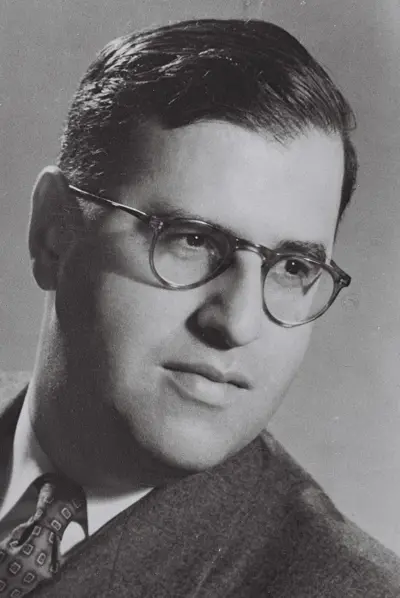
Abba Solomon Meir Eban was an Israeli diplomat and politician, and a scholar of the Arabic and Hebrew languages.
