Stanislaw Lem Quotes
The twentieth century had dispensed with the formal declaration of war and introduced the fifth column, sabotage, cold war, and war by proxy, but that was only the begining. Summit meetings for disarmament pursued mutual understanding and a balance of power but were also held to learn the strengths and weaknesses of the enemy. The world of the war-or-peace alternative became a world in which war was peace and peace war.
Lem, Stanislaw. Peace on Earth. Translated by Elinor Ford with Michael Kandel, Harcourt Brace, 1994.


He was exactly right. See {642079} for a perfect example of this prediction.


Like many in the 1920s, Dewar saw the Communist Soviet Union as the biggest potential risk to peace. However, although the Russian leaders constantly castigated the West, they did not have a large military, and were for the most part highly anti-war as they saw war as the product of Capitalistic competition and the tool of the aristocracy. They had little military equipment and almost no training or officer corps with which to build any Army. Germany in contrast had the skill, experience, officers, a history of aggression, and huge resentment over what they considered their humiliating WWI defeat and peace terms. They would start WWII, not Russia.

It was interesting that Reagan as a political presidential Republican candidate would criticize the foreign policy of the previous Republican Party. However the policy was created by President Richard Nixon who had but a small reservoir of support after Watergate.

At first glance, the reader might think that this quotation in a leading university newspaper was from the Vietnam War era. However, it was argument against U. S. involvement in World War II. There was a very negative reaction to Wilson’s visions and claims for the First World War which never did come to pass that stuck with many.

Most experts believe that this objective was sustained all through the Afghanistan War in the early 21st century.


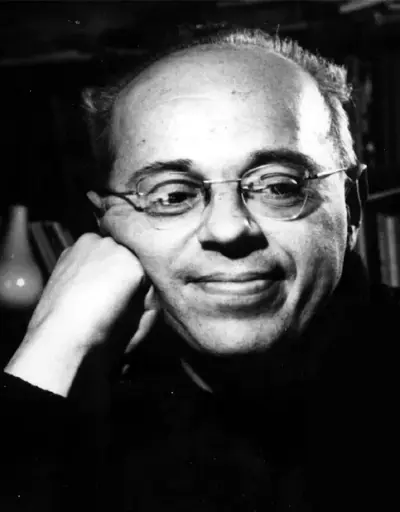
Stanisław Herman Lem was a Polish writer of science fiction and essays on various subjects, including philosophy, futurology, and literary criticism. Many of his science fiction stories are of satirical and humorous character. Lem's books have been translated into over 40 languages and have sold over 45 million copies. Worldwide, he is best known as the author of the 1961 novel Solaris, which has been made into a feature film three times. In 1976 Theodore Sturgeon wrote that Lem was the most widely read science fiction writer in the world. Lem's science fiction works explore philosophical themes through speculations on technology, the nature of intelligence, the impossibility of communication with and understanding of alien intelligence, despair about human limitations, and humanity's place in the Universe. His essays and philosophical books cover these and many other topics.
