Soren Kierkegaard Quotes
The truth is always in the minority, and the minority is always stronger than the majority, because as a rule the minority is made up of those who actually have an opinion, while the strength of the majority is illusory, formed of that crowd which has no opinion — and which therefore the next moment (when it becomes clear that the minority is the stronger) adopts the latter's opinion, which now is in the majority, i. e. becomes rubbish by having the whole retinue and numerousness on its side, while the truth is again in a new minority.
Soren Kierkegaard, 1813-1855, Danish Philosopher, 1850
Sourced by: Eigen's Political and Historical Quotations


This was much more the case in 1840 when this quotation was written. Since then, a much higher proportion of American society has become educated, and the cultures that American immigrants have come from had multiplied. Publications abounded and after radio and television there were more attacks on American majority positions. The major change came with radio call in talk shows, similar TV shows and then the Internet provided a painless way to publicly go against majority opinion. By the first decade of the 21st century, movements of majority rejectionists such as the Tea Party and the Occupy Movement were thriving and “futile contests” received much public attention and showed that there were others with the non-majority views who made it socially acceptable to be outside the norms of the majority.


Madison wrote this essay for publication in New York. That state, one of the largest and most important of the 13 colonies, was polarized about the proposed Constitution and Madison, Hamilton and John Jay produced this great set of essays to convince Americans to vote for ratification. Madison acknowledged that many people had complained about various aspects of the proposed constitution and in this essay he deals with the complaints about political parties—“factions”.


An excellent example of this occurred in the first decades of the 21st century. At the beginning if the century, the majority of Americans were clearly opposed to the idea of same-sex / gay marriage. By 2008, the population was evenly split, for and against. By 2014 the majority of Americans were clearly in favor of same-sex marriage and it had been legalized in more than a dozen states.


Earl of Roscommon


See Otis Singletary and Eddie Bernice Johnson for a similar view.

See Otis Singletary for a similar modern view


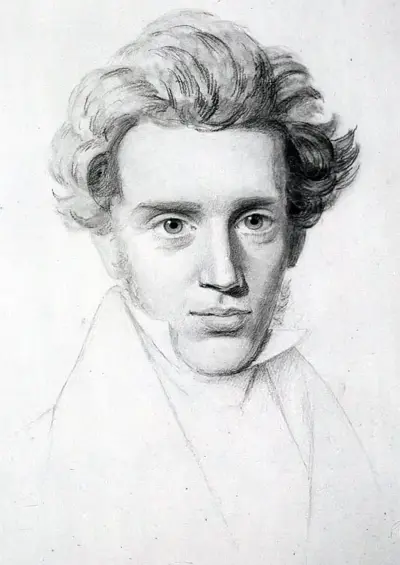
Søren Aabye Kierkegaard was a Danish philosopher, theologian, poet, social critic, and religious author who is widely considered to be the first existentialist philosopher. He wrote critical texts on organized religion, Christendom, morality, ethics, psychology, and the philosophy of religion, displaying a fondness for metaphor, irony, and parables. Much of his philosophical work deals with the issues of how one lives as a "single individual", giving priority to concrete human reality over abstract thinking and highlighting the importance of personal choice and commitment. He was against literary critics who defined idealist intellectuals and philosophers of his time, and thought that Swedenborg, Hegel, Fichte, Schelling, Schlegel, and Hans Christian Andersen were all "understood" far too quickly by "scholars".
