Lord John Russell Quotes
It is impossible that the whisper of a faction should prevail against the voice of a nation.
John Russell, 1792-1878, British Prime Minister, (Whig & Liberal), Letter to T. Attwood, October 1831
Sourced by: Eigen's Political and Historical Quotations


In 1964 Canada stood at a crossroads. a serious political movement dedicated to separation had formed in Quebec. . A terrorist group, the Front de Liberation du Quebec (FLQ.) was at work. The response of Prime Minister Lester Pearson was to create a bipartisan bicultural Royal Commission on Bilingualism.

“Factions” was the word for political parties then.

1st Earl of Beaconsfield

Earl of Roscommon
Faction was the word Madison used for Political Party.


The electoral college had tied between Thomas Jefferson and Aaron Burr, and under the Constitution, this threw the decision to the House of Representatives. The House was deadlocked politically between Federalists and Democratic Republicans, but Jefferson had won the popular vote by a substantial margin. Morris, a leading Federalist, and one of Jefferson’s political enemies, however argued that the will of the people should be respected, and the man who won the popular should be President. The vote then went to Jefferson who became our third President.


An excellent example of this occurred in the first decades of the 21st century. At the beginning if the century, the majority of Americans were clearly opposed to the idea of same-sex / gay marriage. By 2008, the population was evenly split, for and against. By 2014 the majority of Americans were clearly in favor of same-sex marriage and it had been legalized in more than a dozen states.


Madison wrote this essay for publication in New York. That state, one of the largest and most important of the 13 colonies, was polarized about the proposed Constitution and Madison, Hamilton and John Jay produced this great set of essays to convince Americans to vote for ratification. Madison acknowledged that many people had complained about various aspects of the proposed constitution and in this essay he deals with the complaints about political parties—“factions”.


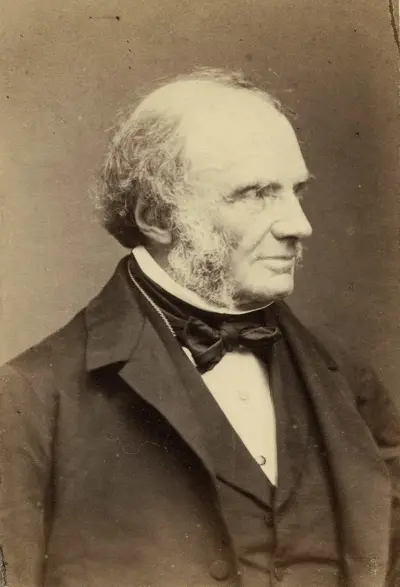
John Russell, 1st Earl Russell, KG, GCMG, PC, FRS, known by his courtesy title Lord John Russell before 1861, was twice Prime Minister of the United Kingdom, serving from 1846 to 1852 as a Whig and from 1865 to 1866 as a Liberal.
