Abd ar-Rahman Quotes
The traffic in slaves is a matter on which all sects and nations have agreed from the time of the sons of Adam ... up to this day. I am not aware of its being prohibited by the laws of any sect, and no one need ask this question, the same being manifest to both high and low and requires no more demonstration than the light of day.
The British Consul was attempting to implement the British government’s new anti-slavery policy.
Abd ar-Rahman, 1778-1859, Sultan of Morocco, Letter to the British Consul General in Morocco, 1842
Sourced by: Eigen's Political and Historical Quotations

He was not correct that all sects and nations have agreed that slavery is desirable. The Jews escaping from Egypt, the early American and British religious sects that were strong abolitionists were examples. However, there were relatively few exceptions and generally, the Sultan had it right.


Many people are surprised that such an anti-slavery could have passed given the Southern states’ position regarding slavery. However, this resolution did not end slavery—just American participation in the slave trade. This would have actually increased the value of the existing slaves in the colonies as “cheap imports” would no longer depress the value of American slaves. The Southern perception was there were enough slaves for their needs and they could breed more. The other states, generally opposing slavery took what they could get---a ban on the slave trade. A major economic fact of the time was the vast majority of the slave trade imports were going to the British Colonies in the Caribbean. Cutting off the American slave trade would do much more harm to the economic interests of Britain than the United States where the only people economically hurt would be the Yankee captains and slave traders who were not very popular of politically connected except in Rhode Island.


This was one of the first steps to ending of slavery in England. The council passed a number of general reforms from this to the prohibition of the clergy frequenting ale houses.


No sooner had Georgia Banned slavery, then some of the large planters petitioned the trustees for a reversal of the ban on the grounds that South Carolina, their neighboring colony allowed planters to use slaves and this put the Georgia planters at a major competitive disadvantage. Oglethorpe won the battle but later lost the war as the ban was overturned and Georgia became one of the worst slave states. What is interesting about this quotation is that in addition to his pragmatic reasons for banning slavery, he was morally offended but the notion and method of chattel slavery and the slave trade. See Quotes 643524 and 643525.


Modern slavery involved forced prostitution, child labor and various forms of indentured servitude together with importing illegal workers and threatening to have them deported if they complain or go public about their slave labor conditions.

The Brown family were very wealthy. John was involved in many speculative enterprises, owned slaves, and had been in the slave trade, and then it had been outlawed in large part by the efforts of his brother, Moses Brown who was a staunch abolitionist and an officer of the Rhode Island Abolition Society. The quotation is important because one theory is that the only reason that the slave trade became illegal was because it was not very profitable due to the high cost and loss ratio and the competition from slaves who were born of slave mothers. So the slave trade was outlawed but not slavery which was so profitable. However, this quotation illustrates how profitable the slave trade was and the early legislation was therefore motivated by ethical and moral concerns.
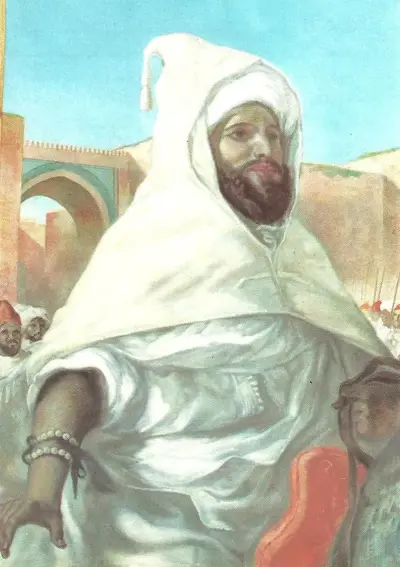
Moulay Abd al-Rahman ibn Hisham (Arabic: عبد الرحمان) was the sultan of Morocco from 1822 to 1859. He was a member of the Alaouite dynasty.
