John Brown Quotes
I have huge debts, and know of no other way to resolve them than to re-enter the slave trade.
The Brown family were very wealthy. John was involved in many speculative enterprises, owned slaves, and had been in the slave trade, and then it had been outlawed in large part by the efforts of his brother, Moses Brown who was a staunch abolitionist and an officer of the Rhode Island Abolition Society. The quotation is important because one theory is that the only reason that the slave trade became illegal was because it was not very profitable due to the high cost and loss ratio and the competition from slaves who were born of slave mothers. So the slave trade was outlawed but not slavery which was so profitable. However, this quotation illustrates how profitable the slave trade was and the early legislation was therefore motivated by ethical and moral concerns.
John Brown, 1736–1803, Rhode Island Merchant, Slave Trader & US Congressman (Rhode Island), Letter to his brother Moses Brown, ~1789
Sourced by: Eigen's Political and Historical Quotations


He was also himself a ship owner in the slave trade and he was the brother of the leading Rhode Island abolitionist, Moses Brown. See {585793}. Brown became the first American, prosecuted in federal court for illegal slave trading –-- a prosecution brought, in part, by his own brother. He was, however, acquitted.


This was one of the first steps to ending of slavery in England. The council passed a number of general reforms from this to the prohibition of the clergy frequenting ale houses.


Brown was the richest man in Rhode Island and made much of his money in the slave trade. This quotation shows that slavery was not completely a North verses South split. Northerners like Brown for whose family Brown University was named, was as virulent supporter of slavery as the most ardent Southerner.
The cotton industry and slavery were a very important part of the economy of Providence, RI. The Rhode Island cotton mills were supplied by Southern cotton produced by slaves and carried from the South on Rhode Island ships. Many of the southern slaves were kidnapped from Africa from Rhode Island slave trading ships. When the slave trade was made illegal, Brown was the first slave trader prosecuted. His brother, Moses Brown, a vehement abolitionist was one of the men who brought the prosecution.
The Southeastern states were in a triple bind regarding slavery. The slave trade was ended so new slaves could not be imported. The existing slaves commanded much higher prices in the West and were sold to those destinations. Meanwhile, the European abject poverty provided a ready source of immigrants who would work for wages that were not much more than the cost of keeping and amortizing a slave. At the beginning of the Civil War, the death knell of Southeastern slavery had already been ringing.

In the Jim Crow era and well into the 20th century, many school books and historians, wanting to minimize the enmity between North and South, tended to a historical revisionism where the real brutal and immoral edge of slavery was minimized and slave owners were depicted as being in error by modern standards but well-meaning and paternalistic. Foner, with this famous quotation, put the lie to the false image of paternalistic slavery. By the beginning of the 21st century, there were very few serious historians who still tried to characterize slavery in the South as “paternalistic” otherwise humane. See {584014} for another of Foner’s famous quotes regarding slavery

William the Conqueror. Note that it was OK to trade, buy and sell slaves and indentured servants as long as foreigners didn’t get the benefit of them.


Jefferson had calculated that if he allowed slaves to “breed”, he could realize a profit of 4% a year just from the increase of the number of slaves he owned. He recommended the business of breeding slaves to several people, and at this time showed no moral compunction about slavery.


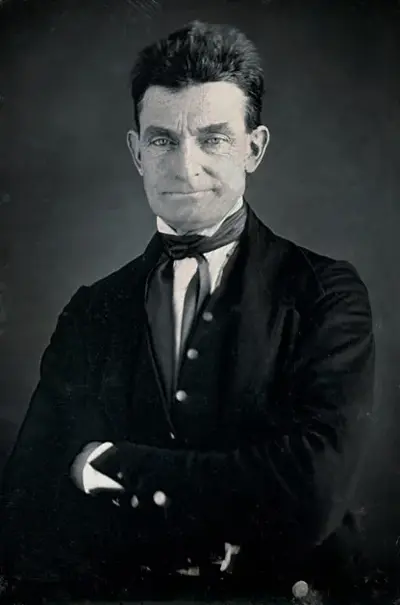
John H. Brown was an American abolitionist leader. Brown felt that violence was necessary to end American slavery, as years of speeches, sermons, petitions, and moral persuasion had failed.
