William Wilberforce Quotes
So enormous, so dreadful, so irremediable did the [slave] trade's wickedness appear that my own mind was completely made up for abolition. Let the consequences be what they would: I from this time determined that I would never rest until I had effected its abolition.
Wilberforce, William. Speech to the House of Commons. 12 May 1789. The Parliamentary History of England, from the Earliest Period to the Year 1803, vol. 28, T. C. Hansard, 1816, p. 42.


He was not correct that all sects and nations have agreed that slavery is desirable. The Jews escaping from Egypt, the early American and British religious sects that were strong abolitionists were examples. However, there were relatively few exceptions and generally, the Sultan had it right.
Louisiana to this day has a different legal system from the rest of the United States as it was originally based on the French Napoleonic Code. Most people did not realize that Louisiana had strictures against breaking up families—even with slaves.

In the Jim Crow era and well into the 20th century, many school books and historians, wanting to minimize the enmity between North and South, tended to a historical revisionism where the real brutal and immoral edge of slavery was minimized and slave owners were depicted as being in error by modern standards but well-meaning and paternalistic. Foner, with this famous quotation, put the lie to the false image of paternalistic slavery. By the beginning of the 21st century, there were very few serious historians who still tried to characterize slavery in the South as “paternalistic” otherwise humane. See {584014} for another of Foner’s famous quotes regarding slavery


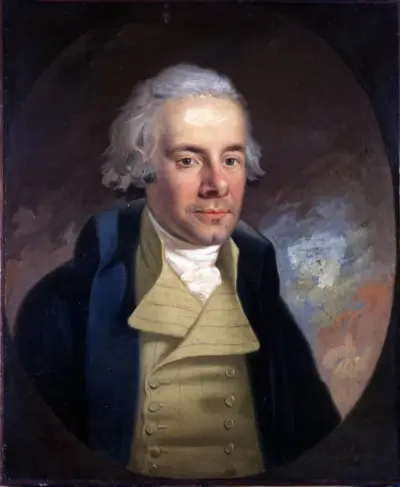
William Wilberforce was a British politician, philanthropist, and a leader of the movement to abolish the slave trade. A native of Kingston upon Hull, Yorkshire, he began his political career in 1780, eventually becoming an independent Member of Parliament (MP) for Yorkshire (1784–1812). In 1785, he became an evangelical Christian, which resulted in major changes to his lifestyle and a lifelong concern for reform.
