Marcus Tullius Cicero Quotes
The strictest law often causes the most serious wrong
Cicero, Marcus Tullius. De Officiis. Translated by Walter Miller, Harvard UP, 1913, p. 35.


The Canadian Courts did not agree with him on these points. The Indians had to register their guns also. See {588005}.


See Ulysses S. Grant for a similar American view that very year.


The United States economic embargo of Cuba is

England, and most other countries of Europe, had put people who could not pay their debts in prison. When our founding fathers formed the constitution, they too saw debtors’ prison as an acceptable concept. 11 years earlier Congress had outlawed Federal Debtors’ Prisons. However many states and local governments then still had them. Smith wanted them abolished completely. What is fascinating about this quotation is that although the head of a religion, Smith was not advocating the kinds of personal lifestyle issues of his church the way modern religious leaders do, but was concerned with the much larger issues of expansionism, corruption of the courts and judiciary, and land distribution. He was a classic reform candidate in that sense. Smith had written to most of the then likely Presidential candidates of both major parties asking for their position on the Mormons who were facing persecution wherever they went. None of the politicians would make any satisfactory commitments. Smith took Direct Action and became the only major religious official to have run for the Presidency of the United States until Pat Robertson tried and failed in 2000. Smith’s assassination shortly thereafter cut his run for the Presidency short before it made much headway and politically he had no chance to affect the race.


This is an interesting retrospective on slavery after the tragedy of the Civil War was recognized.


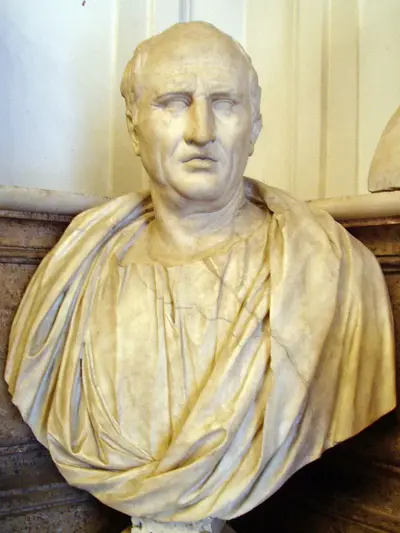
Marcus Tullius Cicero was a Roman statesman, orator, lawyer and philosopher, who served as consul in the year 63 BC. He came from a wealthy municipal family of the Roman equestrian order, and is considered one of Rome's greatest orators and prose stylists.
