James Baldwin Quotes
The Statue of Liberty is for Blacks a … joke.
James Baldwin, 1924-1987, Author, Quoted on PBS Ken Burns Statue of Liberty, September 30, 2002
Sourced by: Eigen's Political and Historical Quotations


President Ford forced him to resign. He had been a holdover from the Nixon Administration. Ford did not chooses him. Nixon appointed him on the advice of the ultra conservatives in the party who liked the fact that he wanted to dismantle many of the FDR New Deal policies. However, he came from Indiana which was the lost racist of all the Northern States. In the 1920s Indiana had the largest membership in the KKK of any state in the Union, and Butz came from this line of racists. He also was convicted for Federal Tax Evasion.


Smith, an extreme racist, was so rabid that MacGregor was supporting the Civil Rights Bill, he followed him off the House floor to make this statement. MacGregor jokingly told Smith that he was wrong. He had 17 Negroes in his District.

Perhaps there is no more dramatic quotation illustrating MacArthur’s arrogance where his own views and decisions should obviously prevail regardless of the policies of his superiors and his commander-in-chief. The army had been officially integrated by President Truman, The reality was that the general honestly believed that he had no superiors among the military, that civilians should not control the military, and in any event that the President—Truman—was not fit to be Commander-in-Chief.


The issue of slavery which had been suppressed in Congress for the first decades of the nation broke out when Missouri statehood was considered. By previous agreement, slavery was not even discussed in Congress but the time period elapsed. Tallmadge not only proposed that no more slaves could come into Missouri {613176} but most shocking to the Southerners was that every person born in the new state would be free at the age of 25. In a generation, there would be no more slavery in Missouri and there would be no economic compensation for slave owners at all. The House of Representatives accepted the amendment, but it failed in the Senate. At that time, Senators were not elected by voters but were appointed by the state legislators and the Southern slave states had a disproportionate share of the senate from a population point of view. But what this quotation shows clearly that a majority of the country in 1819 were opposed to slavery and were willing to end it without compensation.

This became one of the most widely quoted statements of the 1960s and 1970s.
Shortly after WWII, he became the largest builder in the United States. See {634380} for more depth on his view about segregated housing.
Moss and two other blacks had had the temerity to open a grocery store. White competitors attempted to have the city authorities close the store. When that failed, a mob took the three Black owners to the city limits and shot them all to death. Moss was a close friend of Ida B. Wells, and his lynching started her on her no famous anti-lynching expose and campaign. See {44393} for her initial response.

Ames was not a native Southerner but as a General of the Union Army he had been the military commander of the wartime district of Arkansas and Mississippi where he became sufficiently popular to be elected Senator. However, once the segregationists returned to political power, Ames lost his bid for reelection amidst a massive, vicious campaign of intimidating Blacks from voting combined with local, rural corruption of the local balloting process. Ames also served as a general in the Spanish American War and was the last surviving Civil War general.

Booth was the younger son of a very prominent Northern family of actors. His older brother was considered the greatest American actor, and the rest of the family were abolitionists and vehement Union supporters. They found young John’s views reprehensible.

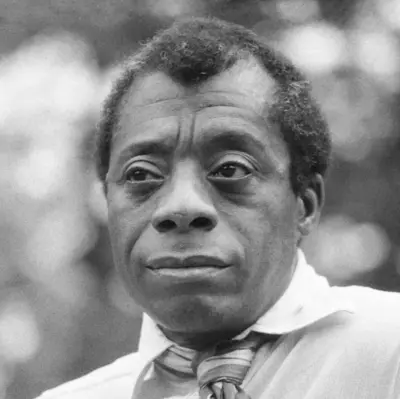
James Arthur Baldwin (August 2, 1924 – December 1, 1987) was an American writer. He garnered acclaim for his work across several mediums, including essays, novels, plays, and poems. His first novel, Go Tell It on the Mountain, was published in 1953; decades later, Time magazine included the novel on its list of the 100 best English-language novels released from 1923 to 2005. His first essay collection, Notes of a Native Son, was published in 1955.
