Samuel Freeman Miller Quotes
The State makes roads. It keeps them in repair. It must in some way be paid in order to be able to do all this. And what difference does it make whether it be paid by a tax of one dollar on each passenger, or by the same sum collected at a toll-gate, or by a gross sum for a license?
Samuel Freeman Miller, 1816-1890, U. S. Supreme Court Justice, Crandall v. Nevada, 1867
Sourced by: Eigen's Political and Historical Quotations

FDR had envisioned a national highway system. He had taken a map of the United States and drew three horizontal lines across the country and another three vertical lines running North to South. These he envisioned as a national highway system. The Second World War intervened with all men and material devoted to the war effort, highway ideas were all on the back burner. After the war President Dwight Eisenhower, in one of the great presidential achievements of American history, initiated the Federal National Highway System. The main difference was a reversal of the classic party positions. Democrat Roosevelt had planned to have the users pay for much or part of the construction and maintenance, while Republican Eisenhower accepted the entire burden on the general taxpayers and tolls and usage fees were banned on Federal Highways.


Although Madison vetoed the Federal bill to improve the national infrastructure, he was very much for the improvements and he said so in this veto message. He, however, did not see the Constitutional authority for the Federal government to appropriate moneys to be spent in the States for infrastructure improvement. He was for a Constitutional Amendment to do so or to make the improvements using State money as New York did building the Erie Canal. Alexander Hamilton, and many of the Congressmen who voted for the bill disagreed (many of whom were also in the Constitutional Convention) and did not see the Constitutional limitation that Madison did. See Hamilton’s Quote 644278. He was particularly concerned that small and less affluent states could not possibly have the skill to design these or the finances to build them. Later President’s and Congresses sided with Hamilton. It would be hard to envision America today of Madison’s view had prevailed.


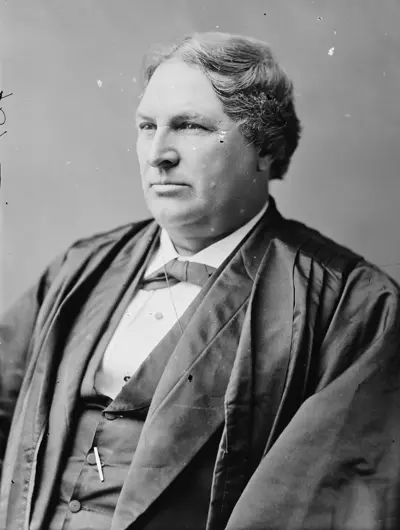
Samuel Freeman Miller was an associate justice of the United States Supreme Court who served from 1862 to 1890. He was a physician and lawyer.
